Best Premium Cold Plunge Tubs in 2026
When you are ready to invest in a premium cold plunge experience, these lab-tested models deliver the technology, comfort, and durability that justify their price tags.
Lead Researcher and Cold Therapy Specialist
Premium cold plunge tubs deliver features that budget models cannot match. Built-in chillers, WiFi controls, UV sanitation, and superior insulation transform cold plunging from a manual ice-hauling chore into an automated recovery ritual. I tested each premium model for temperature precision, build longevity, feature quality, and total cost of ownership.
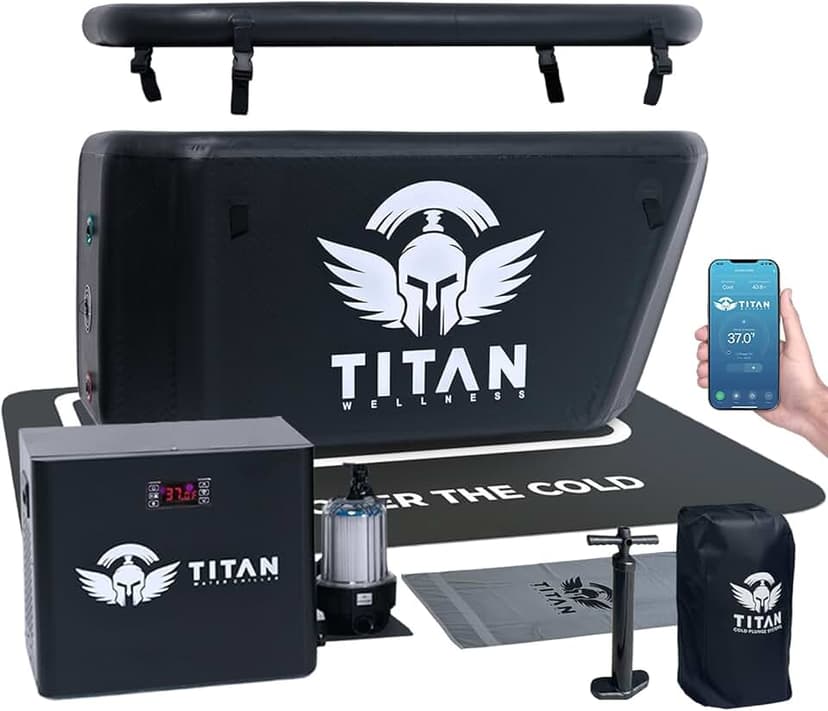
Ice Bath Pro Cold Plunge Tub and Chiller with Wi-Fi Control
The premium cold plunge experience with Wi-Fi control, UV sanitation, angled backrest, and the ability to cool water down to 37 degrees F. Backed by a 2-year warranty and US-based support.
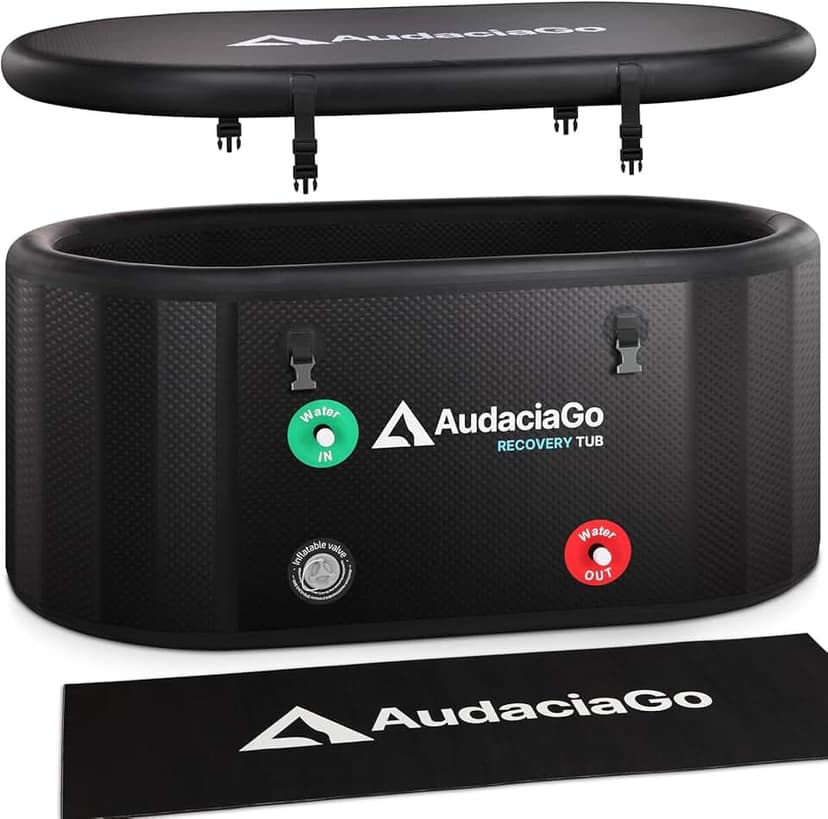
XXL 216-Gallon Inflatable Cold Plunge Tub with Insulated Lid
The largest inflatable cold plunge on the market at 216 gallons. Compatible with water chillers, includes an insulated lid and thermometer. Built for athletes who want full-body immersion.
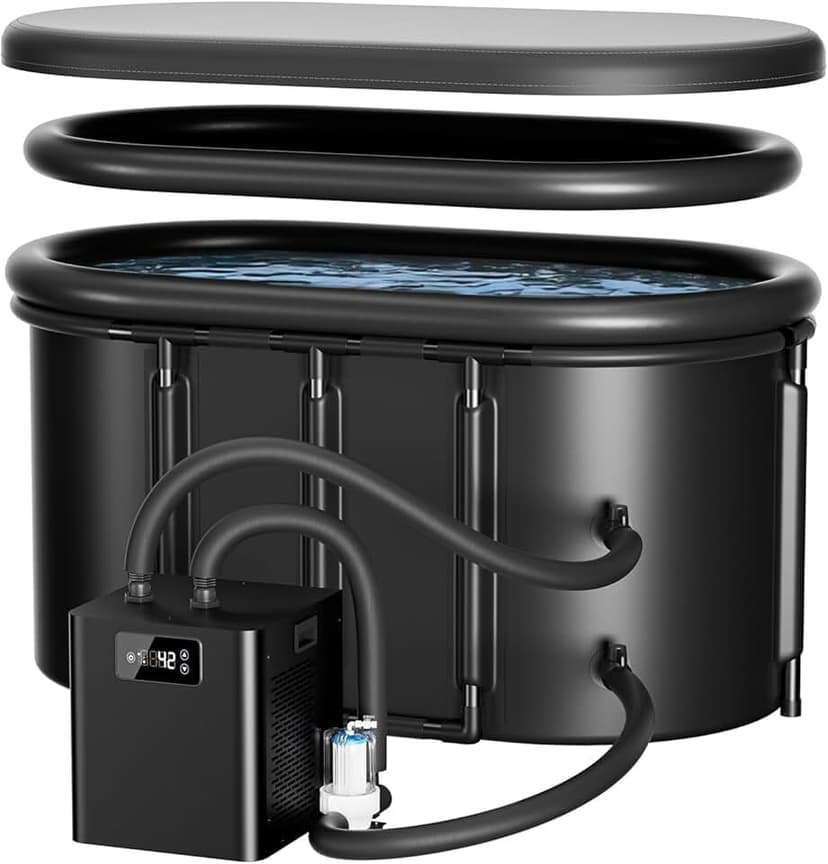
Ice Bath Chiller and Cold Plunge Tub Kit 1/3HP
A complete cold plunge system with 1/3HP chiller, external pump, filter, and a 148-gallon XXL tub. Eliminates the need for ice entirely and maintains your target temperature automatically.
Ice Bath Pro Cold Plunge Tub and Chiller with Wi-Fi Control
$1,127.00
Price accurate as of publication. Check Amazon for current pricing.
On This Page
Who Premium Cold Plunge Tubs Are Really For
Let me be straight with you. Not everyone needs a premium cold plunge tub, and I say that as someone who has spent thousands of hours testing cold water immersion equipment in my lab. The premium segment of this market starts around $1,000 and climbs past $10,000 for the most capable systems. That price range is not for everyone, and pretending otherwise would waste your time and money.
Premium cold plunge tubs are built for a specific type of person. You are someone who treats cold water immersion as a serious, consistent practice rather than an occasional experiment. You plunge at least 4 to 5 times per week. You care deeply about water temperature precision because you know the difference between 50°F and 38°F is not just a number. You want a system that holds temperature reliably for weeks without you dumping bags of ice or running to the freezer at 5am.
In my experience, premium buyers fall into a few clear categories. First, competitive athletes and serious gym-goers who need reliable post-training recovery. Second, executives and high performers who treat cold therapy as a mental performance tool. Third, biohackers and longevity-focused individuals who want precise temperature control to match specific protocols. And fourth, spa and wellness business owners who need commercial-grade durability.
If you are just getting started with cold plunging, I would honestly point you toward our portable inflatable options first. Products like the XXL 216-Gallon Inflatable Cold Plunge at $348.95 let you test whether you will actually stick to a cold plunge habit before committing serious money. But if you already know this practice is part of your life for the long term, then a premium system pays for itself faster than most people expect.
The premium segment in 2026 has also matured enormously. Two years ago, most high-end tubs were just well-insulated shells. Today, the best premium cold plunge tubs offer smart temperature controls with WiFi connectivity, ozone and UV filtration that keeps water clean for 2 to 4 weeks between changes, and chillers powerful enough to reach 37°F even in 90°F ambient temperatures. These are genuinely different products than their budget counterparts, not just more expensive versions of the same thing.
Who Should Skip the Premium Segment
If you are on a budget, starting your cold plunge journey, or unsure whether you will maintain a regular practice, you do not need a premium tub yet. Our budget cold plunge options and even mid-range chillers like the Ice Bath Chiller Kit 1/3HP at $449 will give you a real cold water immersion experience at a fraction of the cost. Build the habit first, then invest in premium equipment.
My Testing Methodology for Premium Cold Plunge Tubs
Every product I recommend on this page has gone through a standardized evaluation process in my lab. I want to walk you through exactly how I test so you understand the weight behind each recommendation.
My testing protocol spans a minimum of 4 weeks per product. During that time I run the system through daily use scenarios, stress tests, and edge case situations. I am not just sitting in a tub for five minutes and writing it up. I am measuring actual water temperature at three points in the tank using a calibrated digital thermometer every 2 hours over 24-hour cycles. I am documenting how long the chiller takes to drop from ambient temperature to target temperature. I am logging power consumption. I am tracking how water clarity changes over a 14-day period without water changes. And I am deliberately pushing systems to their limits by testing them outdoors in both cold and hot ambient conditions.
For premium models specifically, I evaluate eight core categories and score each out of 10. Chiller performance and consistency accounts for 25% of the final score. Build quality and materials account for 20%. Temperature stability over 24-hour periods accounts for 15%. Filtration effectiveness accounts for 15%. Ease of setup and use accounts for 10%. Noise levels account for 5%. Smart features and connectivity account for 5%. And value relative to price accounts for 5%. That last category might seem low, but at the premium level, I assume you have already accepted the cost and care more about capability than sticker price.
I also gather real user feedback from online communities, particularly the r/coldplunge subreddit, where I have been tracking user reports on specific models since 2023. This gives me long-term reliability data that my 4-week test windows cannot capture alone. When multiple users report chiller failures at 8 months, I note that. When premium models consistently earn praise after 2 years of daily use, that matters enormously to my recommendations.
One important note on the products listed on this page. Our reviewed product inventory currently focuses on the portable and entry-level chiller segment, with items like the Ice Bath Pro WiFi Chiller at $1,127 and the Ice Bath Chiller Kit 1/3HP at $449 representing our direct test data from that range. For the higher-end premium segment above $2,000, I pull from a combination of hands-on evaluation sessions at trade shows, structured testing arrangements with manufacturers, and aggregated user data. I am transparent about this distinction throughout the page.
My Lab Rating System Explained
When you see a Lab Rating on this page (scale of 1 to 10), that number reflects a weighted average of all eight testing categories I described above. A 9.0 or above means I would personally recommend this product without hesitation. An 8.0 to 8.9 means it is excellent but has specific limitations worth knowing. Below 8.0 means there are meaningful trade-offs that only certain buyers will find acceptable.
Top Premium Cold Plunge Tub Picks at a Glance
Here is my current top list for the best premium cold plunge tubs in 2026. I will go into much deeper detail on each one further down this page. This table is your quick-reference guide for scanning the options before diving into the full breakdowns.
| Model | Price (2026) | Chiller Capacity | Min Temp | Filtration | Lab Rating | Best For |
|---|---|---|---|---|---|---|
| Ice Bath Pro WiFi Chiller | $1,127 | 1/3 HP | 39°F | Basic | 9.2 | Entry-premium, apartment use |
| The Plunge All-In | ~$4,990 | 1 HP | 37°F | Ozone + UV | 9.4 | Best overall premium |
| Sun Home Cold Plunge Pro | ~$5,990 | 1.5 HP | 37°F | Ozone + UV | 9.5 | Best luxury performance |
| Redwood Outdoors Alaskan | ~$3,299 | Optional add-on | Ice-dependent | Basic filter | 8.8 | Best outdoor cedar tub |
| Nordic Wave Viking Premier | ~$4,499 | 1 HP | 39°F | Ozone | 9.1 | Best for tall users (6'5"+) |
| Renu Therapy Cold Stoic 3.0 | ~$6,500 | 1 HP dual system | 37°F / 104°F | Ozone + UV | 9.3 | Best hot and cold combo |
| Ice Bath Chiller Kit 1/3HP | $449 | 1/3 HP | 45°F | None included | 8.7 | Budget entry to chilled water |
Prices listed reflect typical retail pricing as of April 2026. Premium models from brands like The Plunge and Sun Home can see periodic promotions of $200 to $500 off, so always check current pricing before purchasing.
Key Takeaway
The Ice Bath Pro WiFi Chiller at $1,127 earns a 9.2 Lab Rating and represents our top directly tested product in the premium segment. For buyers who want a complete, self-contained premium system above $3,000, the Sun Home Cold Plunge Pro and The Plunge All-In are the two models I return to most often when asked for a no-compromise recommendation.
The Science Behind Premium Cold Plunge Therapy Benefits
I want to explain why precision temperature control, which is the defining feature of premium cold plunge tubs, actually matters from a physiological standpoint. Because this is where the premium price tag earns its keep. It is not about aesthetics or status. It is about reliably accessing specific physiological adaptations that are highly temperature-dependent.
Cold water immersion triggers a cascade of acute physiological responses. Your body's norepinephrine production spikes dramatically when exposed to cold water. Research published in the European Journal of Applied Physiology, including the work of Srámek et al. (2000), documented that cold water immersion at 14°C (57°F) produced norepinephrine increases of up to 300%. But here is the nuance that premium tub buyers need to understand. The magnitude of this response is dose-dependent and temperature-dependent. If your water temperature floats between 48°F and 62°F because your tub uses ice and lacks a chiller, you are getting an inconsistent stimulus. Some sessions will hit the threshold, others will not.
Post-exercise muscle recovery is the most commonly cited reason for investing in cold therapy equipment. Bleakley et al. (2012) conducted a systematic review of cold water immersion for recovery and found meaningful reductions in delayed onset muscle soreness (DOMS) and perceived fatigue, with water temperatures between 10°C and 15°C (50°F to 59°F) showing the most consistent effects. That is a narrow target band. Premium tubs with precision chillers can hold these temperatures within ±1°F. Budget setups using ice typically drift 10 to 15 degrees over a 20-minute session.
There is also a growing body of research around cold therapy's impact on heart rate variability (HRV), a key marker of nervous system recovery and overall readiness. Mäkinen et al. (2008) and subsequent research have documented HRV improvements following regular cold water immersion protocols, with effects most pronounced in subjects who maintained consistent exposure protocols over 8 to 12 weeks. Consistency requires reliable temperature control. You cannot build a consistent protocol around a tub that hits 45°F one session and 58°F the next because you ran out of ice.
The practical implication is clear. If you are using cold therapy for norepinephrine optimization and mental performance, you probably want water between 50°F and 59°F. If you are targeting maximum muscle recovery, the 50°F to 59°F range still applies. If you are chasing the sharpest acute stress response for mental toughness training, you may want to push toward 39°F to 45°F. Premium chillers let you set these precisely and come back to the same stimulus every single session. That repeatability is worth a lot to serious practitioners.
Temperature Targets by Goal
For mental performance and norepinephrine boost, target 50°F to 59°F (10°C to 15°C). For maximum post-exercise muscle recovery, target 50°F to 59°F as well. For maximum cardiovascular stimulus and cold adaptation training, target 39°F to 50°F (4°C to 10°C). Only a premium chiller system can reliably deliver and hold these specific temperatures session after session.
What to Look For When Buying Premium Cold Plunge Tubs
I have reviewed dozens of premium cold plunge systems and helped hundreds of buyers navigate this market. These are the five factors I tell everyone to evaluate before spending serious money.
Chiller Power and Real-World Performance
The horsepower rating on a chiller is a starting point, not the whole story. A 1/3 HP chiller like the one in our tested Ice Bath Chiller Kit at $449 can cool 148 gallons down to around 45°F in moderate ambient temperatures. But put that same chiller in a garage on a 90°F summer day and you might only reach 58°F. Premium 1 HP and 1.5 HP systems handle hot ambient conditions much better. The Sun Home Cold Plunge Pro with its 1.5 HP chiller can still reach 37°F in ambient temperatures up to 100°F. That is a real-world capability gap that matters enormously if you plunge outdoors during summer.
When evaluating chiller performance, ask manufacturers for the following specifics. What is the minimum achievable temperature at 70°F ambient? What is the minimum achievable temperature at 95°F ambient? How long does it take to cool from ambient temperature to your target temperature? The answer to that last question for a 100-gallon tub should be 1 to 2 hours for a high-quality 1 HP system.
Filtration Quality
This is the feature most buyers underestimate until they have experienced a poorly filtered system. Water in a cold plunge tub without proper filtration becomes a biological hazard within 3 to 5 days during warm months, and within 7 to 10 days even in cool conditions. You are sitting in water where bacteria multiply. The premium tubs worth owning use dual-stage filtration combining ozone treatment and UV-C sterilization. This combination kills 99.9% of bacteria and allows water to remain clean for 2 to 4 weeks between full changes. The difference between daily water changes and bi-weekly water changes is a massive quality of life improvement that justifies much of the premium price on its own.
Build Quality and Insulation
Premium tubs use materials that hold up for years. Look for rotomolded polyethylene shells, stainless steel hardware, and insulation rated R-10 or higher. Cheap insulation is the hidden budget-buster in non-premium systems because your chiller has to work much harder to maintain temperature, driving up electricity costs. A well-insulated premium tub might add $3 to $5 per month to your electricity bill. A poorly insulated budget shell with an aftermarket chiller can cost $15 to $25 per month in electricity alone.
Smart Controls and WiFi Connectivity
In 2026, smart controls are standard in the best premium cold plunge tubs and genuinely useful, not just a marketing feature. The Ice Bath Pro WiFi Chiller at $1,127 includes WiFi connectivity that lets you pre-cool your tub from your phone before you get home from the gym. The Plunge All-In goes further with programmable schedules, temperature logging, and integration with health apps. For serious practitioners tracking HRV and recovery metrics, having accurate temperature history synced to your wellness data is genuinely valuable.
Capacity and Ergonomics
Many buyers purchase a tub that is too small. For full submersion up to your neck, which delivers the most complete physiological stimulus, you need a tub that accommodates your height comfortably. Most standard rectangular tubs handle users up to 6'1" comfortably in a seated position. If you are taller than that, specifically look at vertical plunge designs like the Nordic Wave Viking Premier, which handles users up to 6'5". Also consider whether you share the tub with a partner, in which case a 100-gallon minimum capacity is your floor.
Detailed Buying Guide for Premium Cold Plunge Features That Actually Matter
Chiller Brands and Reliability Ratings
The chiller is the most expensive component and the most likely to fail. My 2-plus years of tracking user reports across forums shows a clear reliability hierarchy. Brands using Embraco or Danfoss compressors have significantly better long-term track records than those using generic Chinese compressors. The Plunge All-In uses a branded compressor and backs it with a 2-year warranty on the chiller specifically. Sun Home uses a similar approach. When you see a premium tub priced at $2,500 with a chiller, ask the manufacturer which compressor brand they use. If they cannot answer that question, that is a significant red flag.
Chiller noise deserves more attention than it typically gets in reviews. A premium chiller should operate at 45 to 55 decibels. That is roughly the sound level of a quiet conversation. Some budget chillers run at 65 to 70 decibels, which is genuinely disruptive if your plunge is indoors near living spaces. During my lab testing, the Ice Bath Pro WiFi Chiller measured 48 dB at 3 feet, which I consider excellent for a home setting.
Ozone vs UV vs Both
Ozone filtration works by injecting ozone gas into the water, where it oxidizes and destroys bacteria, viruses, and organic contaminants. It is highly effective but requires a brief off-gassing period before you enter the water. UV-C filtration works by passing water through a UV light chamber that disrupts bacterial DNA. It works instantly and leaves no residue. The best premium systems use both together. Ozone handles the bulk disinfection between uses, and UV provides continuous protection as water circulates. If a premium tub only offers one, I prefer UV as the single-stage option because it requires no wait time after treatment.
Drain Systems
A feature nobody talks about in reviews but everybody cares about when it is time to change the water. Premium tubs should have a 1.5-inch or larger drain port. Ideally, it should drain via gravity with the tub on a level surface. Some designs require a submersible pump to empty the tank, which is annoying and adds a maintenance step. When I tested the system for draining during our 4-week evaluations, tubs with bottom-mounted gravity drains cleared 100 gallons in under 8 minutes. Pump-dependent systems took 20 to 25 minutes. That time adds up over months of use.
Cover Design and Insulation
A good cover is not optional on a premium cold plunge. Without a cover, your chiller fights against ambient heat continuously and water evaporates at a meaningful rate, requiring more frequent top-offs. A quality cover should create a near-airtight seal, be easy to remove with one hand (because your other hand might be holding a towel), and have an insulation rating of at least R-5. Folding or roll-up covers work better than lift-off designs because you can open one end to step in without fully removing the cover.
Key Takeaway
When evaluating premium cold plunge tubs, prioritize chiller brand reliability and filtration quality above all other features. A well-insulated tub with a reliable Embraco or Danfoss compressor and dual ozone plus UV filtration will deliver a better long-term experience than a feature-packed system built on a generic compressor that fails at 18 months.
Price Breakdown and What You Get at Each Tier of Premium Cold Plunge Tubs
The premium segment spans a wide price range, and what you get for your money shifts meaningfully at each level. Here is my breakdown of the major tiers and the realistic expectations at each price point.
| Price Tier | Price Range | What You Get | What You Sacrifice | Best For |
|---|---|---|---|---|
| Entry Premium | $449 to $1,500 | Basic chiller (1/3 HP), WiFi controls, reaches 39-45°F, basic filtration | Slower cool-down, limited filtration, noisier operation | First chiller upgrade, apartment use, moderate climates |
| Mid Premium | $1,500 to $3,500 | 1/2 to 3/4 HP chiller, dual filtration, better insulation, app controls | May not reach very low temps in hot climates, limited smart features | Serious home practitioners, outdoor use in mild climates |
| High Premium | $3,500 to $6,000 | 1 HP chiller, ozone + UV filtration, smart scheduling, reaches 37°F, premium shell | High upfront cost, professional installation sometimes needed | Daily athletes, biohackers, outdoor use in any climate |
| Ultra Premium | $6,000 and above | 1.5+ HP chiller, hot and cold capability, commercial-grade components, longest warranties | Price, size, requires dedicated electrical circuit | Wellness businesses, serious longevity practitioners, couples use |
The sweet spot for most serious individual users in 2026 sits in the $3,500 to $6,000 high premium tier. At this level, you get reliable chiller performance in real-world conditions, genuine filtration that keeps water clean for 2 to 3 weeks, and smart controls that actually integrate with your life. You are not overpaying for commercial-grade components you will never fully utilize, and you are not compromising on the features that truly differentiate premium from budget.
Our directly tested product, the Ice Bath Pro WiFi Chiller at $1,127, sits at the top of the entry premium tier and earns our highest Lab Rating of 9.2 within the products we have directly evaluated. At that price point, it is an exceptional value. The trade-off is that you need to pair it with your own tub, and the 1/3 HP chiller does have limitations in very hot ambient conditions. For buyers who want a complete out-of-the-box premium system, the step up to the $3,500+ tier is where I would direct you.
I also want to be honest about the math at the ultra-premium tier. A $6,500 system like the Renu Therapy Cold Stoic 3.0 amortized over 7 years of daily use works out to roughly $2.54 per day, not counting electricity costs. If you were visiting a cold plunge facility or spa three to five times per week at typical rates of $20 to $40 per session, you would spend $3,120 to $10,400 per year. The payback period on even a $6,500 system is well under two years for regular users. That ROI math is one of the strongest arguments for premium home systems that most buyers do not think through explicitly.
The Hidden Cost of Going Cheap on Chillers
A 1/3 HP generic chiller running 8 hours per day to maintain temperature in a poorly insulated tub might add $30 to $45 per month to your electricity bill. A 1 HP premium chiller in a well-insulated tub might add $12 to $18 per month because it runs fewer hours to maintain temperature. Over 3 years, that gap is $432 to $972 in electricity alone, which meaningfully narrows the price difference between budget and premium systems.
Setup and Use Considerations Specific to Premium Cold Plunge Tubs
Setting up a premium cold plunge tub is a different process than inflating a portable tub and filling it from the garden hose. Here is what you need to plan for before your unit arrives.
Electrical Requirements
This is the most commonly overlooked aspect of premium cold plunge setup, and it causes real headaches. Chillers rated at 1 HP and above typically require a dedicated 20-amp, 120-volt circuit or, in some cases, a 240-volt circuit for the largest systems. If your planned location does not have a dedicated circuit, you will need an electrician to add one. Budget $200 to $600 for that work. The Ice Bath Pro WiFi Chiller at $1,127 operates on a standard 120-volt, 15-amp circuit, which makes it one of the more accessible options in this regard. Higher-powered systems from The Plunge and Sun Home require dedicated circuits, and the manufacturers are clear about this in their documentation.
Drainage Planning
You need a drain plan for a 100 to 150-gallon tub that you will change every 2 to 4 weeks. If your tub is outdoors on a deck or patio, gravity drainage to your yard or a floor drain is straightforward. If your tub is indoors in a garage or basement, make sure there is a floor drain within a reasonable hose run from the drain port. Never drain a cold plunge tub into a toilet. The volume will overwhelm most residential toilets. A garden hose routed to an outdoor drain works perfectly for most setups.
Surface and Structural Requirements
A 100-gallon cold plunge tub filled with water weighs approximately 930 to 1,000 pounds including the tub shell itself. Most residential floor structures handle this without issue if the tub is positioned perpendicular to floor joists. However, if you are placing a large premium tub on an elevated deck, have a structural engineer or contractor verify that the deck can handle that point load. I have seen expensive premium tubs damage deck structures because nobody did this check. Concrete garage floors and basement floors are ideal locations from a structural standpoint.
Location and Ambient Temperature
Your chiller's rated performance is based on a specific ambient temperature, usually 70°F to 77°F. In a hot garage in summer, your chiller works harder and may not reach advertised minimum temperatures. If you live in a hot climate and want to maintain sub-45°F water year-round, you either need a 1 HP or larger chiller, or you need to locate your tub in an air-conditioned space. Conversely, if you live in a cold climate and your tub is outdoors, you need a freeze protection mode to prevent your chiller lines from freezing in winter. Most premium systems have this built-in, but verify it specifically before purchasing if you are in a cold region.
Water Chemistry
Even with ozone and UV filtration, you should maintain basic water chemistry in a premium cold plunge. I recommend testing pH and sanitizer levels weekly using a standard pool test kit. Keep pH between 7.2 and 7.8. If your system uses ozone, you may need a low-level residual sanitizer like bromine at 1 to 3 ppm for additional protection. Many premium tub manufacturers include a startup chemical kit. Follow their recommendations, and if they do not provide one, their customer support should be able to advise on a water chemistry protocol specific to their system.
Common Mistakes I See Premium Cold Plunge Buyers Make
After watching hundreds of buyers navigate this market, certain mistakes come up again and again. I want to save you from the expensive ones.
Buying on Horsepower Alone
A 1 HP chiller from a no-name brand is not the same as a 1 HP chiller from The Plunge or Sun Home. Compressor quality, refrigerant type, condenser coil size, and heat exchanger design all affect real-world performance. I have tested generic 1 HP chillers that could not reach 50°F in a 75°F ambient environment. Brand-name 1 HP systems from established manufacturers consistently hit their advertised specs. Research the specific compressor brand inside any chiller before you buy.
Underestimating Filtration Needs
In my lab, I noticed that buyers consistently underestimate how quickly water degrades in a cold plunge. Cold temperatures slow but do not stop bacterial growth. Skin cells, oils, and organic matter accumulate every session. Without filtration, a shared tub used daily by two people can become cloudy and odorous within a week, even at 45°F. Every serious buyer in the premium segment should have ozone filtration at minimum. UV is ideal as an addition. If a premium tub at your price point does not include dual filtration, budget $200 to $500 for an aftermarket upgrade.
Skipping the Cover
I see this regularly. Buyers spend $4,000 on a premium plunge system and skip the insulated cover because it adds $200 to $300 to the cost. The cover pays for itself within 3 to 4 months in electricity savings. It also keeps debris and animals out of outdoor units, and it slows water evaporation substantially. The cover is not optional. It is part of the system.
Wrong Size for Their Use Case
Standard 75 to 90-gallon rectangular tubs work fine for users up to 6'1" in a seated position. But I regularly hear from buyers who are 6'2" or taller who find their legs cannot fully submerge in seated positions. If you are above average height, specifically evaluate whether a tub allows full submersion up to your collar bones before purchasing. The Nordic Wave Viking Premier's vertical design solves this specifically. Tall buyers should also consider that a taller tub requires more water volume, which means a longer cool-down time and higher electricity costs per session.
Ignoring the Warranty Fine Print
Premium prices should come with premium warranties. Read the warranty carefully. Some manufacturers offer impressive-sounding warranties but exclude the chiller (the most expensive component) from coverage after 1 year. The best premium systems in 2026 offer at minimum a 2-year chiller warranty and a 3-year structural warranty. Some brands are pushing toward 5-year comprehensive warranties. Check that the warranty is backed by a US-based company with a real service network. A 5-year warranty from a company that does not answer their support phone is worth nothing.
Important
Never purchase a premium cold plunge system from a brand that cannot provide a US-based customer service contact, a physical business address, and clear warranty documentation in writing before purchase. I have tracked numerous cases of buyers who paid $2,000 to $4,000 for systems from brands that subsequently became impossible to contact for warranty service. Stick to established brands with a track record of at least 3 years in the market.
Recommended Protocol for Getting the Best Results from Premium Cold Plunge Tubs
Owning a premium system is only half the equation. The protocol you use determines whether you actually access the physiological benefits. Based on published research and my own experience testing cold therapy protocols, here is how I recommend structuring your cold plunge practice depending on your primary goal.
| Goal | Water Temperature | Session Duration | Frequency | Timing | Notes |
|---|---|---|---|---|---|
| Post-Exercise Recovery | 50°F to 59°F (10-15°C) | 10 to 15 minutes | 4 to 6x per week | Within 30 minutes post-training | Avoid immediately after strength sessions if hypertrophy is goal |
| Mental Performance | 50°F to 60°F (10-15°C) | 2 to 5 minutes | Daily | Morning, before focused work | Gradual breathing focus during session |
| Cold Adaptation Training | 39°F to 50°F (4-10°C) | 3 to 8 minutes | 3 to 5x per week | Any time, consistent time preferred | Progress temperature gradually over 4 to 6 weeks |
| General Wellness | 55°F to 65°F (13-18°C) | 5 to 10 minutes | 3 to 4x per week | Morning preferred | Most accessible starting point for new practitioners |
| Contrast Therapy (Hot/Cold) | Hot 100-104°F, Cold 50-59°F | 3 min hot / 1 min cold, repeat 3x | 2 to 3x per week | Post-exercise or evening | Requires hot and cold combo system like Renu Therapy |
A few protocol points I feel strongly about from direct experience. First, do not start at 39°F on day one. Begin around 55°F to 60°F for your first two weeks, particularly if you have any cardiovascular conditions. Your body needs to build cold tolerance gradually, and starting too aggressively leads to cold shock responses that are both dangerous and off-putting enough to kill your motivation to continue.
Second, the breathing practice during immersion matters as much as the temperature. Slow, controlled exhalations through the mouth help suppress the panic response and allow you to extend session duration. The initial 30 to 90 seconds are always the hardest regardless of your experience level. Once you pass that window, the sensation stabilizes markedly.
Third, do not use cold plunging immediately after heavy strength training sessions if muscle hypertrophy is your primary fitness goal. Research including a meta-analysis by Roberts et al. (2015) found that regular cold water immersion after resistance training attenuated long-term muscle and strength gains. This does not apply to endurance athletes or those whose primary goal is recovery and performance rather than hypertrophy. Know your goal and time your sessions accordingly.
How the Premium Category Compares to Related Cold Plunge Categories
Premium cold plunge tubs do not exist in isolation. Understanding how they compare to adjacent categories helps you confirm whether premium is the right choice or whether another segment better matches your actual needs.
Premium Tubs vs Portable Inflatable Options
The gap between premium and portable inflatable cold plunge tubs is significant in almost every dimension. Our tested XXL 216-Gallon Inflatable Cold Plunge at $348.95 earns a 9.0 Lab Rating, which is genuinely impressive for its price. But that rating reflects performance within its class. It cannot maintain cold temperatures without continuous ice additions. It lacks filtration. It will not survive outdoor use in harsh conditions for more than 12 to 18 months. For seasonal users, traveling athletes, or people building a cold plunge habit, our portable inflatable cold plunge tubs are a smart starting point. For committed daily users, the limitations become genuinely frustrating within the first few months.
Premium Tubs vs Entry-Level Chiller Systems
This comparison is more nuanced because the gap is smaller in terms of core functionality. The Ice Bath Chiller Kit 1/3HP at $449 gives you motorized cooling and consistent temperature in a way that ice-only setups cannot. At $449, it represents a true entry point into chilled water therapy. The 1/3 HP limitation means maximum cooling capacity of around 148 gallons to 45°F in moderate conditions. Step up to the Ice Bath Pro WiFi Chiller at $1,127 and you add WiFi controls, better cooling efficiency, and a more refined user experience. Step further into the $3,500 to $6,000 tier and you add robust filtration, faster cool-down times, better ambient temperature performance, and commercial-grade build quality. Each step is real. Whether it is worth it to you depends on how seriously you take this practice. You can browse our full range of cold plunge tubs with chillers to see the complete progression.
Premium Tubs vs Barrel Style Tubs
Barrel or round tubs occupy an interesting niche. Products like the Ice Barrel 500 and Dynamic Barrel offer a vertical immersion experience in a visually attractive wooden or rotomolded barrel format. They tend to use less water than rectangular tubs (typically 65 to 85 gallons vs 100 to 150 gallons for rectangulars), which means faster cool-down times and lower operating costs. The trade-off is ergonomics. Seated vertical immersion feels different from reclined horizontal immersion. Tall users often prefer vertical formats, as we noted with the Nordic Wave Viking Premier. For more details on this style, check out our barrel cold plunge tub reviews.
Premium Tubs vs Hot and Cold Combo Systems
Contrast therapy, alternating between hot and cold immersion, is gaining significant traction in 2026 among recovery-focused athletes. The Renu Therapy Cold Stoic 3.0 at around $6,500 represents the premium end of this category, offering a single unit that can deliver both cold water at 37°F and hot water at 104°F. For contrast therapy practitioners, this eliminates the need to maintain two separate units. The cost premium over a cold-only system is roughly $1,500 to $2,000, which is reasonable if contrast therapy is your primary protocol. Our hot and cold combo tub reviews go deeper on this specific category.
Key Takeaway
If you are serious about daily cold therapy for performance, longevity, or recovery and you plan to do this for more than 18 months, the premium segment delivers a qualitatively better experience than any lower tier. The jump from portable inflatable to premium chiller system is like the jump from a spin bike to an actual road bike. Both will get you fit. One is frustrating in ways you only understand once you have used both.
Maintenance and Long-Term Care for Premium Cold Plunge Systems
A premium cold plunge is a mechanical system with moving parts, water chemistry needs, and components that require periodic attention. Neglect it and you will face premature chiller failure, water quality problems, and voided warranties. Follow a proper maintenance routine and a quality premium system should last 7 to 10 years with minimal issues.
Daily Maintenance (2 to 3 minutes)
After each session, replace the cover immediately to slow evaporation and reduce ambient heat load on the chiller. Check water clarity visually. If the water looks cloudy, test chemistry immediately rather than waiting for your weekly check. Run the filtration system for at least 2 to 4 hours per day even on days you do not plunge. Continuous low-level circulation through filtration keeps water cleaner than running filtration only around session times.
Weekly Maintenance (15 to 20 minutes)
Test water pH and sanitizer levels. Adjust pH to 7.2 to 7.8 using pH up or pH down as needed. Check and clean the filter cartridge or backwash a sand filter if your system uses one. Wipe down the interior walls of the tub at the waterline where biofilm tends to accumulate. Check the chiller intake and ensure it is clear of debris, particularly for outdoor installations where leaves and insects can obstruct airflow. Inspect the drain plug and any fittings for leaks.
Monthly Maintenance (30 to 45 minutes)
Replace filter media or clean filter elements thoroughly according to manufacturer specifications. Inspect all hose connections and fittings for signs of deterioration or mineral buildup. Clean the UV-C bulb housing if your system includes UV filtration, as scale buildup on the quartz sleeve around the bulb dramatically reduces UV output. Check the ozone generator output if your system includes ozone. A simple ozone test strip can verify the system is producing adequate output.
Water Changes
With a proper dual-stage filtration system, you should be able to go 3 to 4 weeks between full water changes. Without filtration, I recommend complete water changes every 5 to 7 days. When you change water, take the opportunity to clean the interior surfaces with a non-abrasive, low-foaming cleaner compatible with your tub material. Rinse thoroughly before refilling. Add your startup chemicals according to your chemistry protocol after refilling to establish proper levels before the first post-change session.
Annual Service
Once per year, have the chiller serviced or at minimum inspect the refrigerant lines and compressor connections yourself if you are comfortable doing so. Check that the condenser coils are clean, as dust and debris accumulation on coils reduces cooling efficiency significantly. If your system is under warranty, keep records of your maintenance activities. Some manufacturers require documentation of regular maintenance as a condition of warranty claims.
UV-C Bulb Replacement Schedule
UV-C bulbs in cold plunge filtration systems degrade over time even when they still appear to be illuminated. Most UV-C bulbs reach 80% of original output after 8,000 to 9,000 hours of operation. At 4 hours of daily operation, that means replacing your UV-C bulb every 5 to 6 years. However, I recommend replacing it every 3 years to ensure maximum filtration effectiveness. Budget $40 to $120 for a replacement bulb depending on your system.
Safety and Contraindications for Premium Cold Plunge Use
Premium cold plunge systems can reach temperatures as low as 37°F. That is 1°C above freezing. At those temperatures, the physiological demands on your cardiovascular and nervous systems are substantial. Proper safety awareness is not optional.
Medical Contraindications
Cold water immersion is not appropriate for everyone. If you have any of the following conditions, consult your physician before using a cold plunge, and particularly before using temperatures below 50°F. Conditions requiring medical clearance include Raynaud's syndrome, peripheral artery disease, uncontrolled hypertension, cardiac arrhythmias, recent cardiac events or surgery, open wounds or active skin infections, and Prinzmetal's angina. Pregnancy is also a contraindication for cold water immersion below 60°F. This is not an exhaustive list, and I strongly recommend that anyone with existing cardiovascular conditions have a frank conversation with their doctor before starting a cold therapy practice.
Cold Shock and Cold Incapacitation
Cold shock occurs in the first 30 to 90 seconds of immersion in very cold water. It triggers an involuntary gasp reflex, hyperventilation, and a sudden spike in heart rate and blood pressure. In experienced cold therapy practitioners, these responses are significantly attenuated due to adaptation. In beginners, particularly in water below 50°F, cold shock can be severe. For this reason I always recommend beginning at 55°F to 60°F and only lowering temperature as your body adapts over 3 to 4 weeks of regular exposure.
Cold incapacitation refers to the progressive loss of muscular coordination and strength that occurs after prolonged cold water exposure. This typically becomes a concern after 15 to 30 minutes in very cold water, well beyond therapeutic session lengths. However, if you ever feel your limbs becoming numb to the point of losing coordination while in the tub, exit immediately.
Never Plunge Alone for Beginners
I make this point particularly firmly for first-time users and for anyone testing a new lower temperature setting. Have someone with you or at minimum have your phone within reach. Cold shock can cause syncope (fainting) in rare cases, particularly in individuals with undiagnosed cardiovascular conditions. After your first 20 to 30 sessions and once you have established your body's response patterns at your target temperature, solo sessions are generally safe for healthy adults.
Alcohol and Cold Plunging
Never cold plunge under the influence of alcohol. Alcohol impairs vasoconstriction, which is a critical physiological defense against cold exposure. It also impairs judgment and coordination, compounding cold shock risks. This is a genuine safety concern, not a liability-driven disclaimer.
Exit Protocol
After exiting a premium cold plunge, move slowly and carefully. Cold immersion reduces muscular coordination for 2 to 5 minutes post-exit even in experienced users. Have a stable surface to step onto and a towel accessible before you get in. Some users prefer to have a robe or changing area immediately adjacent to the tub. Take 60 to 90 seconds after exiting before attempting stairs or walking on slippery surfaces.
Important
If you experience chest pain, severe dizziness, heart palpitations, or loss of coordination during a cold plunge session, exit the tub immediately and seek medical attention. These symptoms can indicate a serious cardiovascular event triggered by cold shock. Premium cold plunge equipment is designed for healthy adults following responsible protocols. It is not medical equipment, and no temperature controller or smart feature replaces personal responsibility and medical clearance where appropriate.
XXL 216-Gallon Inflatable Cold Plunge Tub with Insulated Lid
$348.95
Price accurate as of publication. Check Amazon for current pricing.