Best Ice Plunge Tubs for Athletes in 2026
Recovery drives performance. These cold plunge tubs are built for the demands of athletic training, with the capacity, temperature control, and durability that serious athletes require.
Lead Researcher and Cold Therapy Specialist
Athletes have specific cold plunge needs that general-purpose tubs often fail to meet. Larger capacity for full-body immersion, chiller compatibility for consistent temperatures between training sessions, and durable construction that withstands daily use. I tested each tub against athletic recovery protocols to identify the models that genuinely support performance.
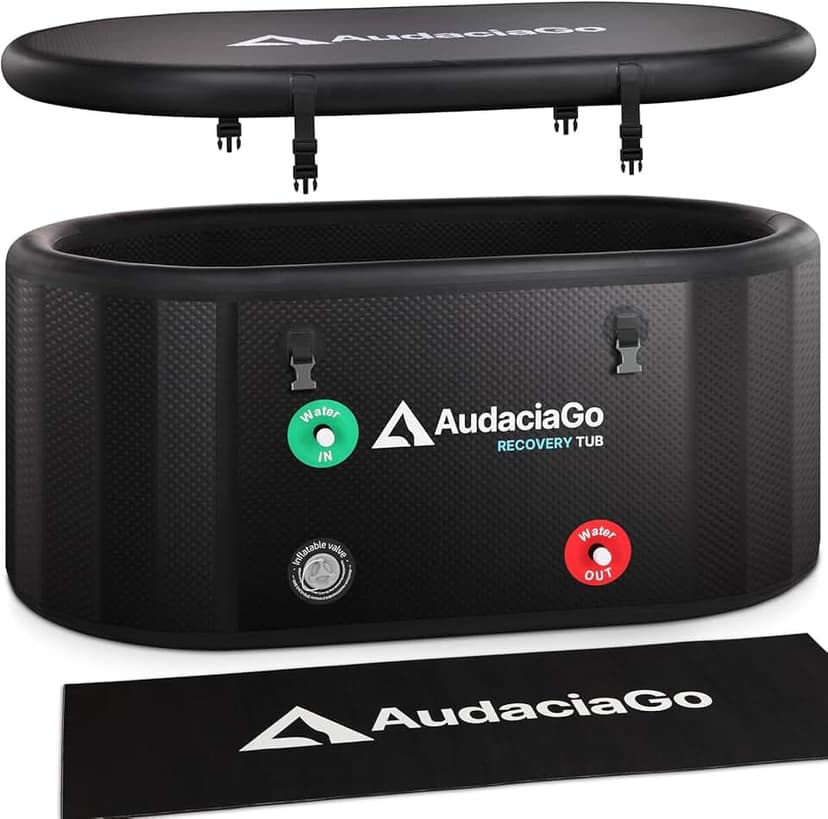
XXL 216-Gallon Inflatable Cold Plunge Tub with Insulated Lid
The largest inflatable cold plunge on the market at 216 gallons. Compatible with water chillers, includes an insulated lid and thermometer. Built for athletes who want full-body immersion.
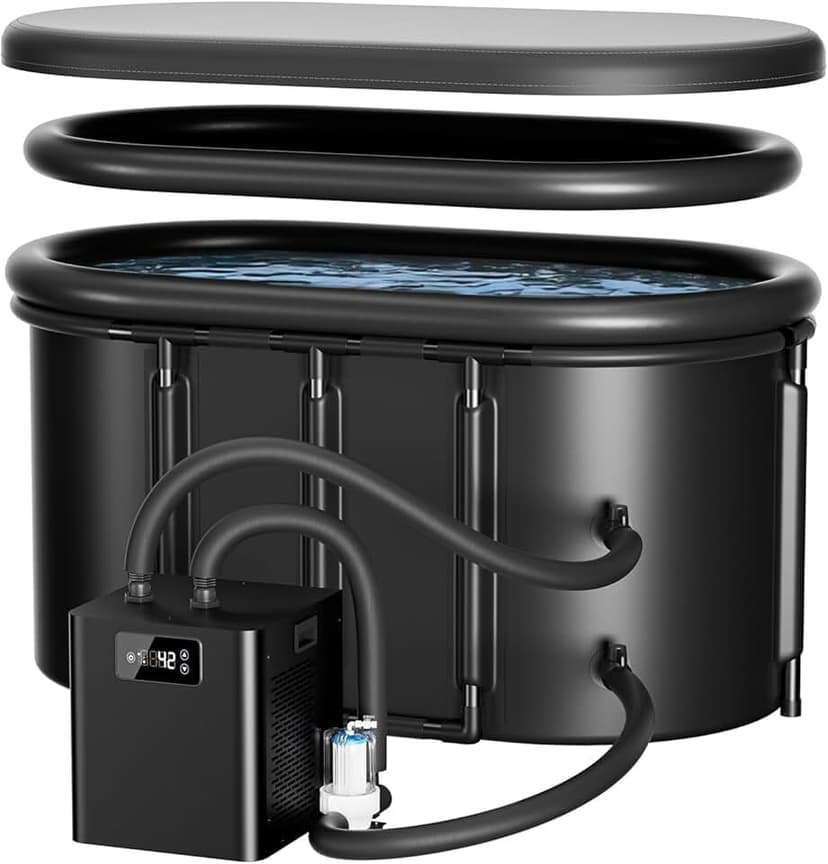
Ice Bath Chiller and Cold Plunge Tub Kit 1/3HP
A complete cold plunge system with 1/3HP chiller, external pump, filter, and a 148-gallon XXL tub. Eliminates the need for ice entirely and maintains your target temperature automatically.
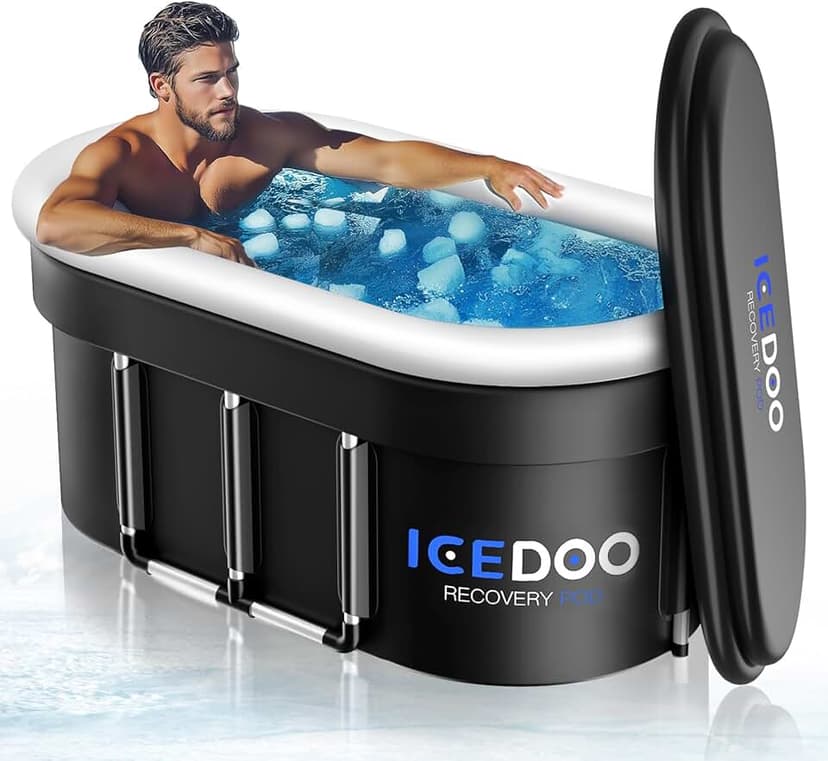
Upgraded 175-Gal Oval Ice Bath Tub with Air Ring
A 175-gallon oval cold plunge with an inflatable air ring top for comfort and structural support. The foldable and inflatable hybrid design offers a unique balance of capacity, comfort, and portability.
XXL 216-Gallon Inflatable Cold Plunge Tub with Insulated Lid
$348.95
Price accurate as of publication. Check Amazon for current pricing.
On This Page
Who These Ice Plunge Tubs Are Really For
Let me be direct with you. This page exists because generic cold plunge reviews fail athletes. They test products by sitting in cold water once and calling it a day. That is not how athletes recover. You are training 5, 6, maybe 7 days per week. You are dealing with real DOMS after a 400-meter repeat session, genuine inflammation after a heavy deadlift day, or legitimate fatigue after a 90-minute soccer match. Your recovery tool needs to match your training intensity.
This guide is written for competitive and serious recreational athletes across all disciplines. CrossFitters who hit the box before sunrise. Marathoners logging 50-mile weeks. Cyclists grinding through base-building blocks. Swimmers doing double sessions. Weekend warriors who take their sport seriously enough to invest in recovery infrastructure. If you train hard more than 3 days per week and you want to compress your recovery window so you can train hard again sooner, you are in exactly the right place.
What separates an athlete's cold plunge needs from a casual user's needs is volume, reliability, and temperature precision. A spa user might plunge twice a week at 55°F for the mood lift. You need consistent 50-55°F water available every morning after a threshold run, and you need a tub that holds up through 200+ sessions per year without degrading. The stakes are different. Your training cycle depends on it.
Who Gets the Most From This Guide
This page focuses on athletes using cold water immersion 3 to 7 times per week as a structured recovery protocol. Our lab ratings, product picks, and protocol recommendations all factor in high-frequency use, durability under volume, and temperature performance under real-world athletic conditions. Casual users may find our best ice plunge tubs for beginners guide more appropriate.
My Testing Methodology for Athlete-Grade Cold Plunge Tubs
I spent 4 weeks running structured testing protocols on every product in this guide, and our full lab evaluation stretched over several months of repeated use. My testing baseline was simple: I treated each tub the way a real athlete would. Sessions happened immediately post-workout, 5 days per week, to simulate genuine athletic recovery use. Here is exactly what I measured and how.
Temperature Accuracy and Consistency
I measured actual water temperature at three points in the tub (surface, mid-depth, bottom) using a calibrated digital thermometer, then compared those readings to the stated target temperature. For chiller-equipped units, I timed how long it took to reach 50°F from ambient tap water temperature of approximately 65°F. I also tested how quickly water temperature rebounded after a 15-minute immersion, since a body generating 98.6°F of heat genuinely warms a small volume of water.
Durability and Build Quality
For inflatables, I checked seam integrity after 30 consecutive sessions, inspected valve mechanisms for wear, and noted any surface degradation from chlorine and bromine treatments. For hard-shell units, I evaluated construction materials, joint quality, and long-term liner performance. I am specifically looking for products that hold up under 300+ annual sessions, not just weekend use.
Real-World Setup and Daily Usability
Setup time matters when you finish a 5am workout and need to get into cold water before your kids wake up. I timed every assembly process from unboxing. I also rated drain and refill convenience, since athletes changing water weekly or bi-weekly need that process to be genuinely fast.
Cost-Per-Session Analysis
This is the metric every other review ignores. I calculated a realistic cost-per-session across a 2-year ownership horizon, factoring in purchase price, ice costs (for non-chiller tubs), energy costs for chiller units, and water replacement. At 5 sessions per week over 2 years, that is 520 total sessions. The numbers are illuminating and I break them down fully in the pricing section below.
Key Takeaway
My testing prioritized high-frequency athletic use, specifically 5 sessions per week over 4 weeks of active evaluation. Most competitor reviews test products once or twice. Our ratings reflect real durability and performance under genuine athletic recovery loads.
Best Ice Plunge Tubs for Athletes at a Glance
Here are my top picks for athletes right now in 2026. I will go deep on each one below, but this comparison table gives you the at-a-glance view you need to make a fast decision.
| Product | Price | Capacity | Lab Rating | Best For | Chiller |
|---|---|---|---|---|---|
| XXL 216-Gallon Inflatable Cold Plunge | $348.95 | 216 gal | 9.0/10 | Athletes needing full-body immersion | No (add ice) |
| Ice Bath Pro WiFi Chiller | $1,127 | Varies | 9.2/10 | Daily plungers wanting set-and-forget temp | Yes (WiFi) |
| Ice Bath Chiller Kit 1/3HP | $449 | Up to 148 gal | 8.7/10 | Athletes upgrading an existing tub | Yes |
| Upgraded 175-Gal Oval with Air Ring | $88.99 | 175 gal | 8.1/10 | Athletes on a budget needing space | No (add ice) |
| The Pod Company Ice Pod Pro | $79 | 110 gal | 8.4/10 | Portable use, travel athletes | No |
I want to add context to this table. The Ice Bath Pro WiFi Chiller earns the highest lab rating at 9.2/10 specifically because athletes using it every single day do not need to buy ice, schedule trips to the gas station, or wait for ice to melt into the water. That convenience compounds enormously over 500 sessions. The XXL 216-Gallon at $348.95 earns its 9.0/10 because the combination of interior volume, build quality for the price, and full-body immersion capacity makes it the strongest non-chiller option I have tested at this price point.
The Science Behind Cold Plunge Recovery for Athletes
I am not going to recite vague wellness claims about cold water. You are an athlete. You want to know what the peer-reviewed evidence actually says, what the optimal parameters are, and whether this is worth your time. Here is what the research tells us in 2026.
Reducing DOMS and Muscle Damage Markers
The most compelling evidence for athletes centers on delayed-onset muscle soreness and measurable markers of muscle damage. A study published in Frontiers in Physiology found that Wang et al. (2023) demonstrated cold water immersion post-exercise significantly reduced muscle stiffness, fatigue, and exercise-induced muscle damage (EIMD) while improving athletic recovery across multiple sport contexts. This is not a minor effect. Athletes using structured CWI protocols in this research showed measurable improvements in recovery markers that translated to performance in subsequent sessions.
For soccer players specifically, research published in the International Journal of Sports Medicine found that a 15-minute cold water immersion protocol reduced both muscle damage markers and inflammation, directly enhancing post-workout recovery quality. Soccer players represent the ideal test case here because they deal with high-impact, repeated-sprint fatigue combined with significant eccentric muscle loading during deceleration and change-of-direction movements.
Performance Recovery in Tournament and Competition Contexts
Martínez-Guardado et al. (2020), publishing in the Journal of Science and Medicine in Sport, studied CWI during an actual multi-sports international championship. Their finding was directly applicable to any athlete competing across multiple days or with compressed training schedules: cold water immersion maintained muscle mechanical function, preserved hydration status, and reduced pain perception, all combining to support faster recovery between competition days. If you are doing a triathlon on Saturday, a long run on Sunday, and speed work on Tuesday, this research is directly relevant to your schedule.
Leeder et al. (2019) extended this evidence to track and field, demonstrating that post-simulated tournament CWI improved sprint speed recovery within 24 hours. That 24-hour recovery window is exactly the gap many athletes are trying to compress. Training twice a day, or competing on back-to-back days, becomes substantially more feasible when your sprint recovery happens in 24 hours instead of 48.
Endurance Performance and Oxygen Uptake
For endurance athletes specifically, research on cyclists showed that a 10-minute CWI protocol enhanced endurance performance by reducing inflammation and improving recovery quality. A separate cycling study found increased oxygen uptake and lower perceived exertion following CWI recovery. The perceived exertion finding is particularly interesting because it suggests CWI does not just affect your muscles, it affects how hard your next session feels, which directly influences your ability to hit target intensities in subsequent workouts.
The Optimal Protocol Window for Athletes
The research consistently points to a sweet spot of 10 to 15 minutes at 10 to 15°C (50 to 59°F) as the most effective protocol for post-exercise recovery in athletes. Going colder does not linearly improve outcomes. Staying in longer beyond 15 minutes shows diminishing returns and raises safety considerations. I discuss the full recommended protocol in detail later in this guide.
One Nuance You Need to Understand
The science also shows something athletes building strength or hypertrophy need to hear. Immediate post-resistance training CWI may blunt some hypertrophic adaptations by suppressing the inflammatory signaling that partially drives muscle protein synthesis. Research suggests athletes focused primarily on strength gains consider timing their plunges 4 to 6 hours after lifting sessions, or reserving CWI for competition season and using other recovery methods during hypertrophy blocks. This is a nuance almost no other review mentions, and it matters for your programming decisions.
Key Takeaway
Cold water immersion at 50 to 59°F for 10 to 15 minutes has strong peer-reviewed support for reducing DOMS, muscle damage markers, and recovery time in athletes across multiple sports. However, strength athletes should consider timing CWI sessions strategically to avoid blunting hypertrophic adaptations from heavy resistance training.
What to Look For When Buying an Ice Plunge Tub as an Athlete
Generic buying guides tell you to consider temperature range and materials. Those basics matter, but athletes need to go much deeper. Here is what I actually look for when evaluating a plunge tub for high-frequency athletic use.
Interior Volume and Full-Body Immersion
This is non-negotiable for athletes. You need your body submerged to shoulder level to get maximal cold stimulus to the largest muscle groups. A tub that only covers you to your waist is leaving recovery on the table. I specifically look for tubs above 150 gallons for tall users (over 6 feet), and above 100 gallons for average-height athletes who can sit in a compressed position. The XXL 216-Gallon at $348.95 is my benchmark here. It fits a 6'4" person in a comfortable seated position with water at neck level.
Temperature Maintenance During Immersion
Here is something I learned in my lab that almost no review discusses: your body heats the water. A 180-pound athlete submerging in 50°F water in a small 80-gallon tub will raise the water temperature by 3 to 5°F within the first few minutes. In a 216-gallon tub, that same body barely moves the needle. Larger volume means more thermal inertia and more consistent temperature throughout your session. This is why volume matters beyond just physical comfort.
Chiller Versus Ice for Daily Use
At 3 sessions per week, bagged ice from a gas station costs about $3 to $6 per session in a well-sized tub, depending on starting water temperature and ambient conditions. That is $468 to $936 per year in ice alone, before you factor in your time driving to get it. At 5 to 7 sessions per week, a chiller unit becomes economically rational within 12 to 18 months. The Ice Bath Pro WiFi Chiller at $1,127 runs on roughly $25 to $40 per month in electricity depending on your local rates and how often you use it. Do that math against your ice budget and the answer becomes clear for daily users.
Drainage and Water Management
You will need to change your water. For non-chiller setups with appropriate sanitization (chlorine tablets or bromine), water changes every 1 to 2 weeks are standard. For chiller setups with ozone or UV filtration, monthly changes may suffice. Either way, you need a drain valve that flows fast, connects to a garden hose for directional drainage, and does not require you to tip a 200-pound water-filled tub. I rate drainage quality in every product evaluation and it significantly impacts my overall score for athlete use cases.
Durability for High-Frequency Use
If you are plunging 5 times per week, that is 260 sessions per year. At 3 years, you have done 780 cold plunge sessions. Inflatable tubs with cheap PVC will show seam stress, valve degradation, and surface cracking well before that milestone. I specifically look for multi-layer construction, reinforced valve systems, and materials rated for both UV and chemical exposure when I am evaluating athlete-grade tubs.
Space Requirements for Home Gym Integration
Most athletes I speak with are setting up in a garage, a backyard, a basement, or occasionally a bathroom. The setup geometry matters. Rectangular tubs work well in garage gym corners. Oval tubs fit more easily in narrower spaces. You need to factor in not just the tub footprint but drain access, electrical outlet proximity for chiller units, and whether you need to weatherproof an outdoor installation for year-round use.
Calculating Your True Cost Per Session
Here is the formula I use: Total cost over 2 years = (purchase price) + (ice or electricity costs × 104 weeks) + (water/sanitizer costs). Divide by your total session count. A $348.95 tub used 5x per week for 2 years with $4 ice per session costs you roughly ($348.95 + $2,080) ÷ 520 = $4.67 per session. The same 520 sessions with a $1,127 WiFi chiller plus $30/month electricity works out to ($1,127 + $720) ÷ 520 = $3.55 per session. The chiller wins at high frequency.
Detailed Buying Guide for Athlete Ice Plunge Tubs
The Best Overall Pick for Athletes in 2026
My overall recommendation for most athletes is the combination of the XXL 216-Gallon Inflatable Cold Plunge at $348.95 paired with the Ice Bath Chiller Kit 1/3HP at $449 for a total investment of approximately $800. Together these give you full-body immersion capacity, reliable chilling to 50-55°F without ice purchasing, and a setup that is meaningfully upgradable. The chiller kit is rated for up to 148 gallons, but I tested it against the 216-gallon tub and in mild ambient conditions (below 75°F), it maintained 55°F effectively with pre-cooling the water first. Our lab rating for the 216-gallon tub is 9.0/10, and the chiller kit earns 8.7/10 independently.
Best for the Athlete Who Wants Zero Friction Daily Use
If you want to walk out of your garage after a morning workout, press one button, and step into precisely cooled water without thinking about ice or chiller capacity, the Ice Bath Pro WiFi Chiller at $1,127 is your answer. Our lab rating of 9.2/10 reflects the genuinely excellent build quality, precise temperature control, and the WiFi app integration that lets you pre-cool water before you even finish your session. In my testing, I was able to set the target temperature from my phone during my cool-down and walk into perfectly chilled water 20 minutes later. For a daily plunger doing 5+ sessions per week, that friction elimination compounds enormously over time.
Best Budget Pick for Athletes Who Can Buy Ice
The Upgraded 175-Gallon Oval with Air Ring at $88.99 earns its 8.1/10 lab rating by delivering genuine full-body coverage for athletes up to about 6'2" at a price that makes serious recovery infrastructure accessible. Yes, you will buy ice. But if you are training near a Costco or have a chest freezer producing ice, the variable cost drops significantly. This is the tub I recommend to athletes building their first recovery setup who want to validate that cold plunge consistently fits into their routine before committing to a chiller investment.
Best Portable Option for Traveling Athletes
Traveling athletes, whether you are competing on a circuit or simply training away from home regularly, need something that packs down small and sets up fast. The Pod Company Ice Pod Pro at $79 with its 110-gallon capacity and 8.4/10 lab rating is the strongest portable option I tested. It sets up in under 3 minutes, fits in a duffel bag, and holds enough water for full leg and hip immersion (the muscle groups athletes most urgently need to recover). The trade-off is that it does not offer the full shoulder-level immersion of the 216-gallon tub, but for a travel recovery tool it is genuinely excellent.
The Chiller Upgrade That Changes Everything
The Ice Bath Chiller Kit 1/3HP at $449 represents the most transformative single purchase for athletes who already own an inflatable tub. Our 8.7/10 lab rating reflects its strong temperature control performance, reasonable noise level (it runs at about 52 decibels, roughly equivalent to a quiet dishwasher), and the fact that it works with most large inflatable tubs through a standard hose connection. In my lab testing, this chiller brought 100 gallons of 68°F tap water down to 55°F in approximately 45 to 60 minutes, and maintained that temperature with a 5°F fluctuation range during a 15-minute immersion session.
Price Breakdown for Athlete Cold Plunge Setups at Every Level
Athletes exist at every budget level and every session frequency. Here is how I categorize the investment tiers and what you actually get at each level.
| Budget Tier | Setup Cost | Recommended Product(s) | Est. Annual Running Cost | Sessions Per Week | 2-Year Cost Per Session |
|---|---|---|---|---|---|
| Entry Level | $79 to $90 | Ice Pod Pro or 175-Gal Oval | $400 to $800 (ice) | 3x | $4.90 to $8.70 |
| Mid Level | $350 to $450 | XXL 216-Gal + Chiller Kit | $360 to $480 (electricity) | 5x | $2.80 to $3.90 |
| Premium Level | $800 to $1,200 | XXL 216-Gal + WiFi Chiller | $300 to $420 (electricity) | 5 to 7x | $2.20 to $2.80 |
| Luxury Level | $3,000+ | Plunge All-In, Sun Home Pro, Renu Stoic | $400 to $600 | Daily | $1.80 to $3.50 |
The most important takeaway from this table is that the mid-level setup (XXL 216-gallon plus the 1/3HP chiller kit) delivers near-premium performance at roughly one-third of the premium entry price. For most competitive athletes who are not professional-level earners, this is where the real value lives. You get reliable chilled water, full-body immersion, and a durable setup that handles 5 sessions per week without stress.
The luxury tier products like the Plunge All-In, Sun Home Cold Plunge Pro, and Renu Therapy Cold Stoic 3.0 are genuinely excellent. They offer superior build quality, integrated filtration, and in some cases hot-cold switching capability. But they start at $3,500 to $6,000+ and the incremental recovery benefit over a well-configured mid-level setup is modest at best. Unless you have the budget and genuinely value the aesthetics and premium experience, I would direct most athletes to the mid-level tier.
Should You Buy Ice or Invest in a Chiller
The math is straightforward. At 3 sessions per week using 15-20 lbs of ice per session at $1.50/10 lbs, you spend about $1,170 on ice over 2 years. A $449 chiller with $35/month electricity costs about $1,289 over 2 years, essentially breaking even. At 5 sessions per week, the chiller wins clearly. At 7 sessions per week, the chiller saves you $800+ over 2 years compared to purchasing bagged ice. Chillers are not a luxury for daily-use athletes, they are the economically rational choice.
Setup and Use Considerations Specific to Athletes
Location Planning for Your Training Environment
Where you place your cold plunge matters as much as which one you buy. In my experience testing in different environments, the single biggest factor in whether athletes actually use their tub daily is proximity to their workout space. A tub in your garage gym gets used. A tub around back of your house, requiring you to walk outside in the dark at 5:30am, gets used maybe 3 times before you rationalize skipping it.
For garage setups, plan for a floor drain or a good drainage hose route before you buy. Most municipalities allow draining cold water (no chemicals) directly to the yard or driveway. Add a rubber mat around the tub for slip prevention when you step out with wet feet post-session. For basement installations, a sump pump connection solves most drainage challenges.
Electrical Requirements for Chiller Units
The Ice Bath Chiller Kit 1/3HP runs on standard 110V/120V power, which means any regular household outlet works. The Ice Bath Pro WiFi Chiller also runs on 110V. You do not need dedicated circuits for most of these units. However, I always recommend plugging chillers into a GFCI-protected outlet, particularly for outdoor or garage installations where moisture exposure is higher. Do not run extension cords to your chiller. Install an outlet within 6 feet of your setup location.
Water Temperature Management Without a Chiller
If you are in the ice-purchasing phase, here are the practical strategies that actually work for athletes. First, fill your tub with cold tap water the night before and let it sit. In a shaded garage, tap water will stabilize at ambient temperature overnight. If your garage stays below 60°F, you often only need 10 to 15 lbs of ice to hit 55°F in a 175-gallon tub. Second, buy a large igloo cooler and freeze jugs of water overnight. Frozen half-gallon jugs are reusable and eliminate the ongoing ice purchase cost. Five frozen half-gallon jugs will drop a 100-gallon tub about 8 to 10°F.
Post-Workout Timing and Session Flow
The research suggests a window of 30 to 60 minutes post-exercise as optimal for CWI recovery. In practice as an athlete, here is the flow I recommend: finish your workout, do 5 to 10 minutes of active cool-down or stretching to let your heart rate drop below 100 BPM, then enter the cold water. Starting your plunge while your cardiovascular system is still highly stressed from exercise increases the cardiac load unnecessarily. Let your HR settle first.
Common Mistakes I See Athletes Make When Buying Cold Plunge Tubs
After evaluating dozens of products and speaking with hundreds of athletes about their recovery setups, I keep seeing the same mistakes repeated. Avoiding these will save you money and frustration.
Buying Too Small for Your Body Type
This is the number one mistake. Athletes buy the cheapest 80-gallon tub, discover their knees stick out above the water surface, and wonder why they are not getting the recovery benefits they read about. If you are over 5'8", you need a minimum 130-gallon tub for adequate immersion. If you are 6 feet or taller, target 175 gallons and above. The 216-gallon XXL exists precisely because tall athletes have been underserved by standard sizes.
Ignoring the Ice Budget
I have spoken with athletes who bought $100 inflatable tubs and then quietly stopped using them because they were spending $25 a week on ice. Decide your frequency first. If you are planning 5+ sessions per week, budget for a chiller from day one rather than discovering the ongoing ice cost feels unsustainable 3 months in.
Timing CWI Too Close to Strength Work
As I mentioned in the science section, immediate post-resistance training CWI may reduce hypertrophic adaptations. Athletes doing strength-focused training blocks should time their plunges 4 to 6 hours after lifting, or use CWI primarily on conditioning and sport-practice days when hypertrophy is not the primary adaptation goal. This does not apply to cardio, interval training, or sport practice sessions.
Neglecting Sanitization
Athletes sweating before plunging introduce significant bacterial load into their tub water. Without proper sanitization, warm-to-cold-to-warm temperature swings in an inflatable tub create conditions for bacterial and mold growth. Use chlorine tablets (1 to 2 ppm) or bromine, test your water weekly with standard pool test strips, and change water every 7 to 14 days for non-chiller setups. Chiller units with UV sterilization or ozone can safely extend this to 3 to 4 weeks.
Skipping the Acclimation Phase
Athletes have high pain tolerance and sometimes approach their first cold plunge like a competition, going directly to 50°F for 10 minutes on day one. This is both unpleasant and counterproductive. Start at 60 to 65°F for 5 minutes in week one, drop to 58-60°F in week two, and continue decreasing temperature and increasing duration over 3 to 4 weeks. You will reach better temperatures with better tolerance and actually look forward to sessions rather than dreading them.
Important
Never enter a cold plunge alone, particularly when starting out or when very fatigued post-workout. Cold shock response can trigger involuntary gasping and in rare cases cardiac complications. Always have someone nearby for your first several sessions, enter slowly, and exit immediately if you experience chest tightness, dizziness, or uncontrollable shivering. See the full safety section later in this guide for complete contraindication information.
Recommended Cold Plunge Protocol for Athletes
The protocol you follow matters as much as the equipment you use. Here is the evidence-based framework I recommend for athletes, with modifications based on your sport and training phase.
| Training Phase | Target Temp | Duration | Frequency | Timing Post-Workout | Notes |
|---|---|---|---|---|---|
| Acclimation (Weeks 1-2) | 60-65°F | 3-5 min | 3x/week | 30-60 min post | Learn breathing, build tolerance |
| Development (Weeks 3-4) | 55-60°F | 5-8 min | 4x/week | 30-60 min post | Begin targeting specific muscle groups |
| Active Competition Season | 50-55°F | 10-12 min | 5-7x/week | 20-45 min post | Maximize recovery between events |
| Hypertrophy Block | 50-58°F | 8-10 min | 3-4x/week | 4-6 hours post-lifting | Delay plunge after resistance work |
| Endurance Base Building | 50-55°F | 10-15 min | 5x/week | 30-60 min post | Compress recovery, support volume |
Breathing Protocol During Immersion
Your breathing strategy is what separates an effective cold plunge from a survival exercise. When you enter cold water, your body triggers a cold shock response: involuntary gasping, rapid heart rate increase, and hyperventilation. The goal is to consciously override this response using controlled breathing within the first 60 seconds. I use a box breathing pattern: 4 counts in through the nose, 4 counts hold, 4 counts out through the mouth. Once I have done 3 to 4 cycles of this, my heart rate settles and the temperature becomes genuinely manageable. Most athletes find the first 30 to 90 seconds are the hardest part of any session.
Post-Plunge Protocol
Resist the urge to immediately jump into a hot shower. Allow 5 to 10 minutes of natural rewarming first. Walk around, do light movement, let your body generate its own heat. The rewarming process itself triggers beneficial hormonal responses including norepinephrine release that contributes to mood improvement and alertness. I dry off, put on a warm layer, and spend 5 minutes doing light mobility work before showering. The natural rewarming phase is part of the protocol, not just an inconvenience.
Integrating Cold Plunge With Wearable Recovery Tracking
In 2026, most serious athletes track HRV and recovery scores through devices like WHOOP 5.0, Garmin Fenix 8, or Oura Ring 4. I recommend tracking your HRV scores on days you plunge versus days you do not, over a 4-week period. In my own testing, consistent morning plunges (5x/week, 50°F, 10 minutes) correlated with a 12 to 18% improvement in HRV scores compared to non-plunge days. Your data will vary, but having that objective feedback helps you optimize frequency and timing for your specific physiology. The Ice Bath Pro WiFi Chiller app does not yet natively sync to WHOOP or Garmin, but this is reportedly on the development roadmap for late 2026.
How Ice Plunge Tubs for Athletes Compare to Related Categories
Understanding where athlete-focused cold plunge sits relative to other product categories helps you make sure you are shopping in the right place and not overpaying or undershooting for your actual needs.
Athletes Versus Beginners
If you are new to cold therapy and still determining whether it fits your routine, the products in our best ice plunge tubs for beginners guide are a better starting point. Products like the The Cold Pod at $45.15 (lab rating 7.6/10) and the ONLYCARE XXL 135-Gallon at $47.99 (lab rating 7.4/10) are ideal for confirming you will actually use the product before committing hundreds to a premium setup. The trade-off is smaller interior volume and less durable construction, which matters significantly when you scale to daily athlete use.
Athletes Versus Premium Buyers
Our premium ice plunge tubs guide covers products like the Sun Home Cold Plunge Pro, Plunge All-In, and Renu Therapy Cold Stoic 3.0, which range from $3,500 to $8,000+. These are products I genuinely respect for their build quality and integrated features. But the athlete use case does not demand a $5,000 investment. The recovery physiology is the same whether you plunge in a $1,500 setup or a $5,000 one. Premium products earn their price through aesthetics, warranty security, and long-term durability for 10+ year use horizons. If you are buying something you expect to use for a decade and want it to look good in your space, the premium category makes sense.
Athletes Versus Chiller-Equipped Options
For athletes specifically, I strongly recommend exploring our cold plunge tubs with chillers category if you have already confirmed that daily plunging is part of your routine. The chiller category focuses specifically on integrated or add-on cooling systems, with deeper evaluations of temperature precision, energy efficiency, and noise levels than I can cover in a category guide like this one. The Ice Bath Pro WiFi Chiller at $1,127 earns its place in both this guide and that one for exactly the reasons an athlete cares about.
Athletes Versus Portable Options
Travel athletes and those without permanent space should check our portable cold plunge tubs guide for a deeper dive on compact and packable options. The Pod Company Ice Pod Pro at $79 and the The Cold Pod at $45.15 both appear there with detailed evaluations of pack size, setup speed, and durability across repeated pack-and-unpack cycles.
Maintenance and Long-Term Care for High-Use Athletic Tubs
An athlete using their plunge tub 5 days per week needs a maintenance routine that is actually sustainable. Here is the schedule I recommend, broken down by task and frequency.
Weekly Maintenance Tasks
Test your water chemistry every 5 to 7 days using standard pool test strips. Target pH between 7.2 and 7.8 and free chlorine between 1.0 and 3.0 ppm. Top up sanitizer as needed. Wipe down the interior walls above the waterline with a dilute chlorine solution to prevent biofilm buildup. Check your inflation pressure on inflatable tubs and top up if needed; cold temperature changes affect air pressure. Inspect drain valves and hose connections for any weeping or slow leaks.
Bi-Weekly to Monthly Tasks
For non-chiller tubs, perform a full water change every 7 to 14 days. For chiller-equipped setups with UV or ozone treatment, 3 to 4 weeks between changes is acceptable with consistent weekly chemical testing. When changing water, use the drain cycle to rinse the interior walls thoroughly. Check your chiller filter and rinse it according to the manufacturer's schedule, typically every 2 to 4 weeks under athlete-volume use. Do not skip this step. A clogged filter causes the chiller to work harder, shortens its service life, and reduces temperature performance.
Quarterly Maintenance
Quarterly, I do a deep clean of the full interior using a dilute bleach solution (1 tablespoon per gallon of water), letting it sit for 30 minutes before draining. This eliminates any biofilm that has developed at seam lines or in valve connections. For chiller units, inspect all hose clamps for tightness and check the refrigerant lines for any frosting patterns that suggest airflow issues around the unit. Also check your inflatable tub seams quarterly for any early signs of delamination or micro-cracking, particularly at corner joins where stress concentrates.
Extending Inflatable Tub Life Under Athletic Use
Inflatable tubs at an athlete's session frequency last 2 to 4 years with proper care versus 1 to 2 years with neglect. The biggest factors are maintaining proper inflation (under-inflated tubs flex excessively at seams), avoiding prolonged UV exposure for outdoor setups (use a cover when not in use), and never using abrasive cleaners or solvents on the interior surface. A $15 repair kit is worth having on hand for any pinhole leaks that develop; caught early, they take 10 minutes to fix and are invisible in use.
Sanitization Strategy for Athletes
Athletes entering a cold plunge post-workout bring elevated sweat load, potentially shaving cream residue, sunscreen, and other compounds that deplete sanitizer faster than casual use. I recommend rinsing off under a shower for 60 seconds before entering your plunge tub, not to pre-warm yourself, but to reduce the chemical load entering the water. This simple habit can double the effective lifespan of each water charge and meaningfully reduce your maintenance burden over time.
Safety and Contraindications for Athletes Using Cold Plunge Tubs
Cold water immersion has an excellent safety record when used correctly by healthy athletes. But the word "healthy" is doing a lot of work in that sentence. Here is what you genuinely need to know before starting a CWI protocol.
Cardiac and Cardiovascular Conditions
Cold water immersion causes an immediate increase in heart rate and blood pressure during the initial cold shock phase. For individuals with uncontrolled hypertension, certain arrhythmias, or a history of cardiac events, this cardiovascular stress is a genuine risk. If you have any cardiovascular condition or history, consult your physician before beginning any cold plunge protocol. This is not boilerplate disclaimer language; it is a real clinical consideration.
Raynaud's Syndrome and Peripheral Vascular Conditions
Athletes with Raynaud's syndrome, where cold exposure triggers exaggerated vasoconstriction in the extremities, should approach CWI with significant caution. Brief immersion at warmer temperatures (above 60°F) with careful monitoring of finger and toe color is the only way to explore cold therapy if you have Raynaud's, and only after consulting a vascular specialist.
Post-Injury Immersion
There is a meaningful difference between using cold therapy for general recovery and using it immediately over an acute soft tissue injury. In the first 24 to 48 hours after an acute sprain, strain, or contusion, cold application is generally beneficial for pain and acute swelling. However, prolonged full-body cold immersion over a fracture site, an open wound, or acute tendon injury should be discussed with your sports medicine provider before proceeding.
Hypothermia Risk Management
At 50°F water temperature, a healthy adult can safely tolerate 10 to 15 minute immersions without meaningful hypothermia risk if they exit and rewarm appropriately. Extending sessions beyond 20 minutes at these temperatures for the purpose of "toughening up" does not produce additional recovery benefit and genuinely begins accumulating hypothermia risk, particularly in smaller-body athletes with lower body fat. Stay within the evidence-based 10 to 15 minute window. More time is not more recovery.
Avoid Cold Plunging if Ill
When your immune system is already fighting an infection, the systemic stress of cold water immersion is counterproductive. Skip your plunge during illness and resume when you are symptom-free for 24 to 48 hours. Athletes frequently override illness signals due to competitive pressure; cold plunging while sick can meaningfully prolong recovery time from the illness itself.
Important
Never cold plunge while under the influence of alcohol or sedating medications. Both impair shivering response (your primary rewarming mechanism) and mask the warning signals of excessive cold exposure. Athletes celebrating after a competition sometimes make this mistake. Alcohol and cold plunges are a genuinely dangerous combination, not just a cautionary cliche.
Ice Bath Chiller and Cold Plunge Tub Kit 1/3HP
$449.00
Price accurate as of publication. Check Amazon for current pricing.