Cold Plunge vs Cryotherapy Chambers in 2026
Both methods deliver cold therapy, but the experience, cost, and research behind them differ significantly. Here is how they compare head to head.
Lead Researcher and Cold Therapy Specialist
Table of Contents
How Each Method Works
Cold plunge tubs work through water immersion. Water conducts heat 25 times more efficiently than air, which means 50-degree water extracts heat from your body far more rapidly than 50-degree air would. When you sit in a cold plunge tub, the water makes continuous contact with your skin, creating a uniform and intense cold stimulus across your entire submerged body. The immersion creates hydrostatic pressure, an additional factor that cryotherapy chambers cannot replicate. This pressure compresses blood vessels and tissues, contributing to the fluid shift that helps flush metabolic waste. Research by Wilcock et al. (2006) identified hydrostatic pressure as a meaningful contributor to the recovery benefits of cold water immersion, separate from the temperature effects. Cryotherapy chambers work differently. You stand in a chamber (or enter a room-sized unit) wearing minimal clothing while extremely cold air circulates around your body. Sessions last 2-4 minutes due to the extreme temperatures. The air cools your skin surface rapidly but has limited ability to penetrate deep into muscle tissue due to the short exposure time and air's poor thermal conductivity. This distinction matters for recovery. The depth of tissue cooling determines how effectively cold therapy reaches damaged muscles and inflamed tissue. A 2017 study by Costello et al. in the European Journal of Applied Physiology measured tissue cooling depth during both modalities and found that cold water immersion cooled muscles to a significantly greater depth than whole-body cryotherapy at any standard protocol duration.What the Research Says
The research base for cold water immersion is substantially larger and more robust than for whole-body cryotherapy. Decades of published studies support cold water immersion's effects on DOMS, inflammatory markers, and perceived recovery. Cryotherapy research is more limited and often lower quality. A systematic review by Costello et al. (2015) in the British Journal of Sports Medicine concluded that the evidence for whole-body cryotherapy was insufficient to recommend it over cold water immersion for recovery. The review noted that many cryotherapy studies lacked appropriate controls, used small sample sizes, or relied primarily on subjective outcome measures. A head-to-head comparison by Abaïdia et al. (2017) published in PLOS ONE directly compared cold water immersion at 10 degrees Celsius for 10 minutes against whole-body cryotherapy at negative 110 degrees Celsius for 3 minutes. Both modalities reduced perceived muscle soreness, but cold water immersion showed superior effects on reducing blood markers of muscle damage. This does not mean cryotherapy is ineffective. Individual studies have shown positive effects on recovery and pain management. However, the weight of evidence currently favors cold water immersion as the better-supported modality. The gap may narrow as more high-quality cryotherapy research is published.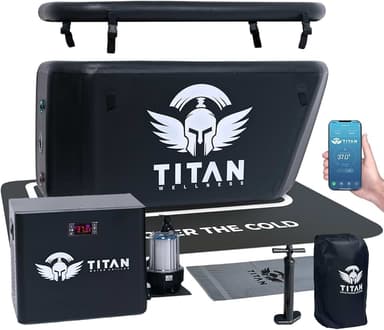
Ice Bath Pro
Ice Bath Pro Cold Plunge Tub and Chiller with Wi-Fi Control
The premium cold plunge experience with Wi-Fi control, UV sanitation, angled backrest, and the ability to cool water down to 37 degrees F. Backed by a 2-year warranty and US-based support.
Cost Analysis Over 12 Months
The financial comparison between cold plunging and cryotherapy is stark and heavily favors home cold plunge setups. Cryotherapy sessions at commercial facilities typically cost $40-80 per session. At three sessions per week, the annual cost ranges from $6,240 to $12,480. Some facilities offer monthly memberships in the $200-400 range, reducing the annual cost to $2,400-4,800 for unlimited sessions. Even at membership rates, the ongoing expense is substantial. A home cold plunge tub ranges from $30 for a basic portable model to $1,200 for a premium chiller-equipped system. Ice costs for manual setups average $10-20 per week ($520-1,040 annually), or zero for chiller-equipped systems after the initial electricity cost of roughly $10-25 per month. Over 12 months, a basic cold plunge setup (a $50 tub plus ice) costs approximately $570-1,090 total. A premium setup with a chiller costs approximately $1,350-1,500 including electricity. Compared to even the cheapest cryotherapy membership at $2,400 annually, home cold plunging saves $1,000-2,000 per year. The home cold plunge tub also gives you unlimited access. You can plunge every morning, after every workout, and on weekends without scheduling around facility hours or commuting to a location. This convenience factor alone often determines whether someone maintains a consistent cold therapy practice.Convenience and Accessibility
Home cold plunge setups win on convenience in almost every category. Your tub is available 24/7. There is no commute, no appointment, no changing room, and no waiting for your turn. You can plunge at 5 AM before work or at 10 PM after a late training session. Cryotherapy requires visiting a facility during business hours. Most cryotherapy centers are located in urban areas, making access difficult for suburban or rural residents. Travel time, parking, and session scheduling add friction that reduces consistency. Maintenance is the one area where cryotherapy has an advantage. You show up, step in the chamber, and leave. Cold plunge tubs require water changes, ice management, and basic cleaning. Chiller-equipped tubs reduce this burden but still need periodic filter changes and water treatment. The COVID-19 pandemic permanently shifted consumer preferences toward home wellness equipment, and cold plunge tubs were among the primary beneficiaries. The ability to control your own equipment, hygiene, and schedule has become a priority for health-conscious consumers.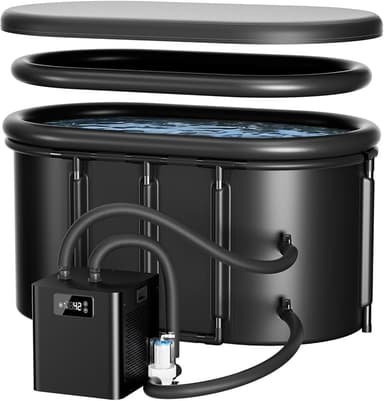
Cold Plunge Systems
Ice Bath Chiller and Cold Plunge Tub Kit 1/3HP
A complete cold plunge system with 1/3HP chiller, external pump, filter, and a 148-gallon XXL tub. Eliminates the need for ice entirely and maintains your target temperature automatically.
Which Is Better for You
Choose cold plunging if you want the strongest research backing, lower long-term costs, maximum convenience, and the ability to customize your protocol. Cold water immersion delivers deeper tissue cooling, has decades of research support, and can be set up at home for a fraction of the cost of ongoing cryotherapy sessions. Choose cryotherapy if you dislike water immersion, want zero maintenance, prefer the novelty and social aspect of visiting a facility, or have specific conditions that make water immersion uncomfortable (certain skin conditions or claustrophobia in enclosed tubs). For most people reading this article, a home cold plunge tub is the more practical and effective choice. The evidence supports it, the cost justifies it, and the convenience ensures you will actually use it consistently enough to see results. If you want the best of both worlds, many cold plunge practitioners use their home tub for daily practice and visit a cryotherapy facility occasionally for the novelty and extreme cold stimulus. There is no reason these modalities need to be mutually exclusive.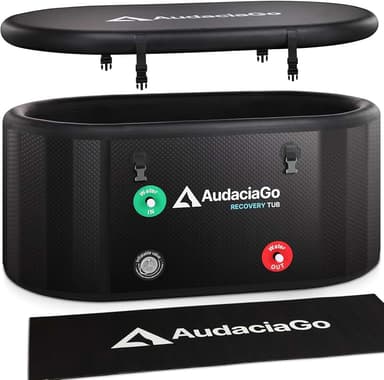
Cold Plunge Pro
XXL 216-Gallon Inflatable Cold Plunge Tub with Insulated Lid
The largest inflatable cold plunge on the market at 216 gallons. Compatible with water chillers, includes an insulated lid and thermometer. Built for athletes who want full-body immersion.
Lead Researcher and Cold Therapy Specialist
Products Mentioned in This Article
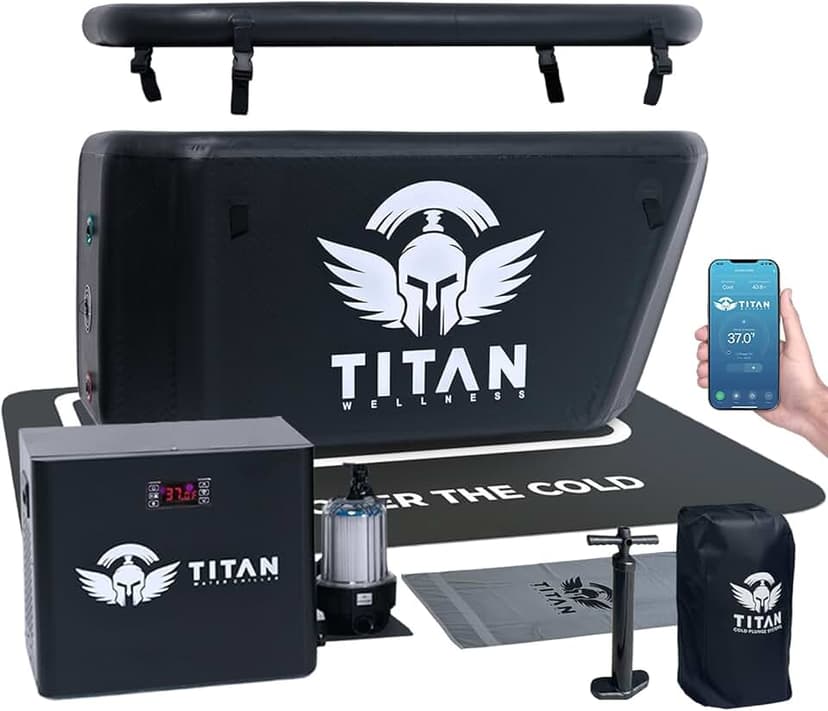
Ice Bath Pro Cold Plunge Tub and Chiller with Wi-Fi Control
The premium cold plunge experience with Wi-Fi control, UV sanitation, angled backrest, and the ability to cool water down to 37 degrees F. Backed by a 2-year warranty and US-based support.
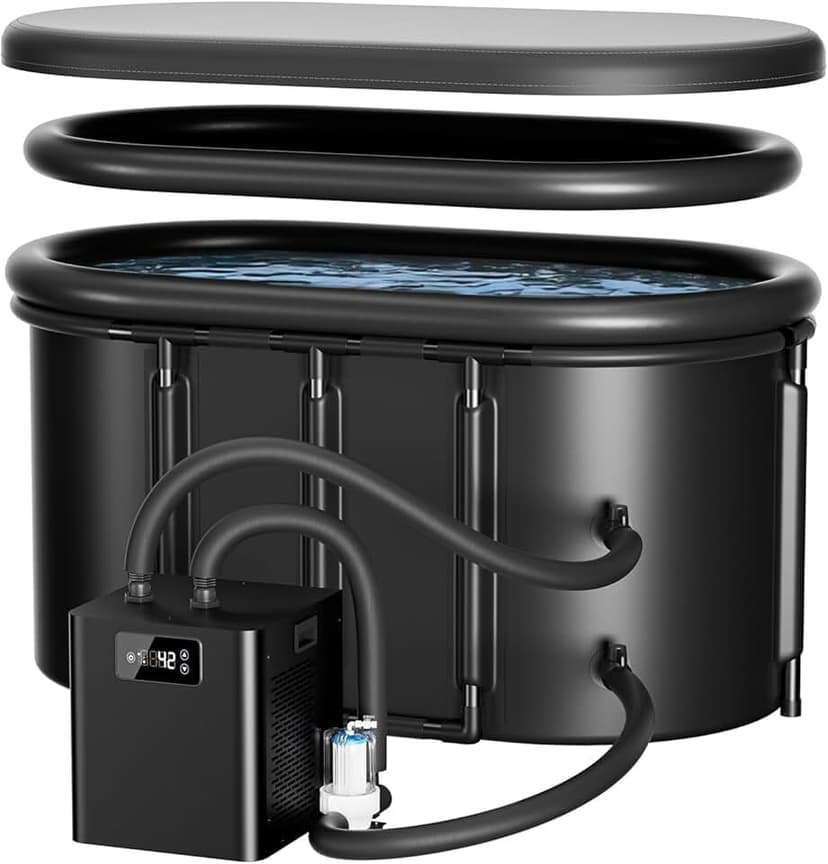
Ice Bath Chiller and Cold Plunge Tub Kit 1/3HP
A complete cold plunge system with 1/3HP chiller, external pump, filter, and a 148-gallon XXL tub. Eliminates the need for ice entirely and maintains your target temperature automatically.
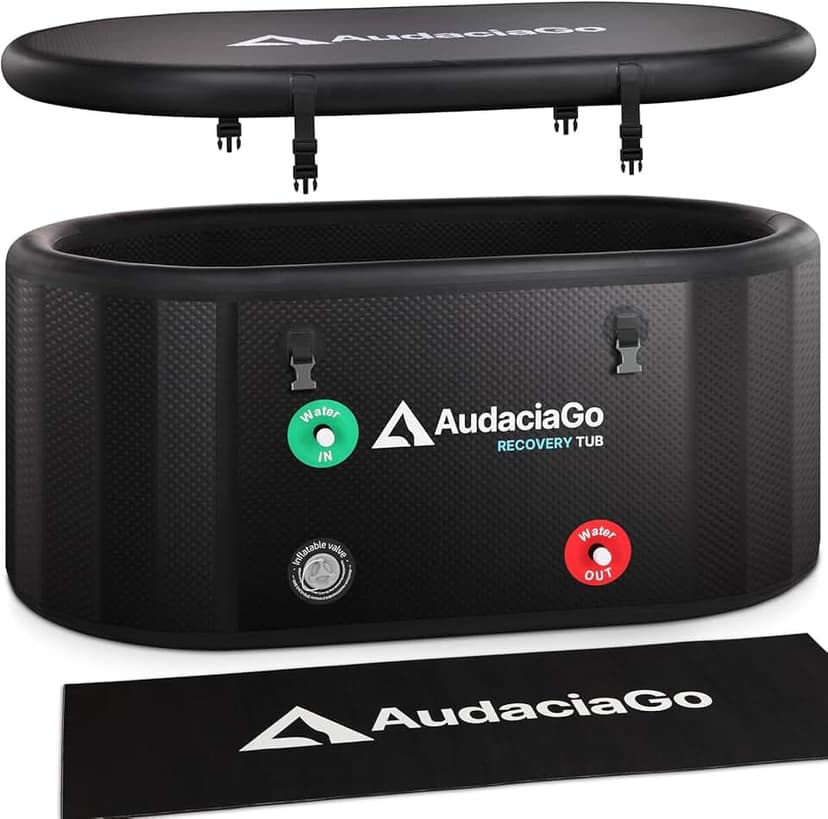
XXL 216-Gallon Inflatable Cold Plunge Tub with Insulated Lid
The largest inflatable cold plunge on the market at 216 gallons. Compatible with water chillers, includes an insulated lid and thermometer. Built for athletes who want full-body immersion.