The Athlete's Guide to Cold Plunge Recovery in 2026
A sport-specific recovery guide covering how different athletes should use cold plunging to support training and competition performance.
Product Testing Lead and Wellness Writer
Table of Contents
Cold Plunge Recovery Fundamentals
Athletic recovery from cold water immersion works through three primary mechanisms that are well-established in sports science literature. First, vasoconstriction and the subsequent rebound vasodilation create a pumping effect that helps clear metabolic waste products from working muscles. This accelerates the removal of inflammatory markers, hydrogen ions, and other byproducts of intense exercise. Second, the anti-inflammatory effect of cold exposure reduces the magnitude of exercise-induced inflammation. This modulation of the inflammatory response is what primarily drives the reduction in delayed onset muscle soreness (DOMS) that research consistently demonstrates. Third, the analgesic (pain-reducing) effect of cold water directly reduces pain signaling from sore or damaged tissues. This is a peripheral effect related to reduced nerve conduction velocity at lower tissue temperatures, similar to applying ice to an acute injury. These three mechanisms work differently depending on the type of exercise performed, which is why a one-size-fits-all approach to cold plunge recovery is suboptimal.Protocols for Endurance Athletes
Runners, cyclists, swimmers, and triathletes create muscle damage primarily through eccentric loading (particularly in running) and metabolic stress from sustained effort. Cold water immersion is highly effective for this type of training damage. After long endurance sessions (runs over 90 minutes, rides over 2 hours), immerse in 50-55 degree water for 10-15 minutes within 30 minutes of finishing. This protocol addresses both the metabolic waste accumulation and the inflammatory response to eccentric muscle damage. Research by Broatch et al. (2014) demonstrated significant reductions in creatine kinase levels (a marker of muscle damage) with this approach after cycling. After interval or tempo sessions, a shorter 5-8 minute immersion at 50-55 degrees is sufficient. The muscle damage from these sessions is typically less severe than long endurance efforts, so a shorter exposure achieves adequate recovery. During high-mileage training blocks, daily cold plunging supports cumulative recovery. The anti-inflammatory effects help manage the chronic low-grade inflammation that accumulates during training blocks exceeding 50-60 miles per week of running or 200+ miles per week of cycling. Critically, cold water immersion does not appear to blunt aerobic adaptations in the way it can blunt hypertrophy adaptations. Research by Ihsan et al. (2020) found that cold water immersion after endurance training did not impair mitochondrial biogenesis or aerobic enzyme activity. This makes post-session cold plunging a straightforward recommendation for endurance athletes without the timing caveats that apply to strength training.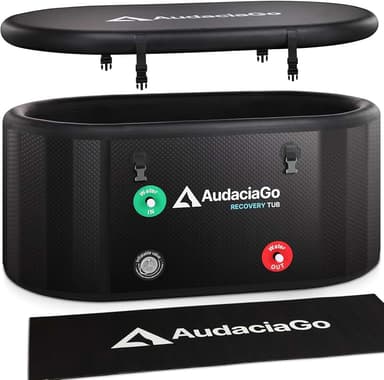
Cold Plunge Pro
XXL 216-Gallon Inflatable Cold Plunge Tub with Insulated Lid
The largest inflatable cold plunge on the market at 216 gallons. Compatible with water chillers, includes an insulated lid and thermometer. Built for athletes who want full-body immersion.
Protocols for Strength Athletes
Weightlifters, powerlifters, and bodybuilders face a more nuanced situation with cold water immersion. The Roberts et al. (2015) finding that post-exercise cold water immersion blunted muscle hypertrophy and strength gains has appropriately made strength athletes cautious. The key is timing and selectivity. Avoid cold plunging within 4-6 hours of hypertrophy-focused training sessions. The inflammatory signaling cascade that drives muscle adaptation peaks within the first 2-4 hours post-exercise. Cold exposure during this window suppresses the signal. Use cold plunging on rest days for general recovery and wellbeing. The anti-inflammatory and mood-enhancing effects support recovery between training sessions without interfering with the adaptation stimulus from the workouts themselves. During deload weeks or competition prep phases, post-workout cold plunging becomes more acceptable because the priority shifts from adaptation to performance readiness. When you are not trying to build muscle but rather prepare for a competition, maximizing recovery speed takes precedence. After particularly demanding sessions (heavy singles, high-volume squats, or competition-level efforts), cold plunging in the evening (6+ hours post-training) can help manage soreness without significantly impacting the adaptation window.Protocols for Team Sport Athletes
Soccer, basketball, rugby, hockey, and similar team sports create mixed recovery demands. Sprinting and cutting create eccentric muscle damage. Contact creates soft tissue trauma. Sustained play creates metabolic fatigue. Cold water immersion addresses all three simultaneously. After games, a 10-15 minute full-body immersion at 50-55 degrees within 30 minutes of the final whistle is the gold standard protocol. The comprehensive anti-inflammatory effect helps with the diverse tissue damage that team sports produce. Research on professional rugby players by Gill et al. (2006) found that cold water immersion after matches significantly reduced creatine kinase levels and perceived soreness compared to passive recovery. After practice sessions, the protocol depends on practice intensity. Full-contact or high-intensity tactical sessions warrant a full 10-minute cold plunge. Technical sessions or film study days do not require cold water immersion. During tournament or congested fixture schedules with games every 3-4 days, aggressive recovery between games is critical. Cold plunging immediately post-game, followed by the next day's active recovery session, optimizes the limited recovery window.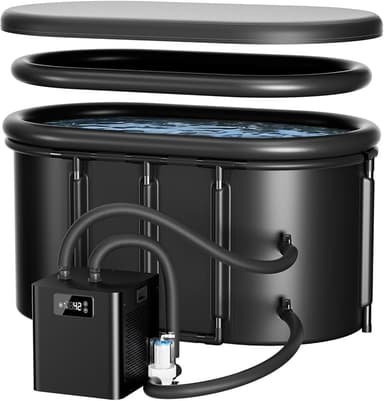
Cold Plunge Systems
Ice Bath Chiller and Cold Plunge Tub Kit 1/3HP
A complete cold plunge system with 1/3HP chiller, external pump, filter, and a 148-gallon XXL tub. Eliminates the need for ice entirely and maintains your target temperature automatically.
Competition Day Recovery
Competition is the highest-priority application of cold water immersion for athletes. Maximum performance has already been delivered, and the sole focus shifts to recovering as quickly as possible. Post-competition cold plunge protocol involves immersion at 50-52 degrees for 12-15 minutes within 30 minutes of finishing. This is the most aggressive protocol recommended because there are no adaptation concerns and maximum recovery speed is the exclusive goal. For multi-day competitions (tournament formats, stage races, track meets), cold plunging between events or sessions becomes a tactical recovery tool. A brief 5-minute immersion between sessions can manage cumulative fatigue and maintain performance quality across events. Travel logistics often complicate post-competition recovery. Portable cold plunge tubs that pack into a gear bag solve this problem. Several of our reviewed products fold down to backpack size, making them viable travel recovery tools for serious competitors.Integrating Cold Plunging with Training Periodization
Smart cold plunge use follows your training periodization rather than being a constant in every phase. During base building and high-volume phases, cold plunging supports the recovery demands of accumulated training stress. Use it after the hardest sessions and on rest days for general recovery. During strength-building and hypertrophy phases, reduce post-workout cold plunging to protect adaptation signals. Limit cold exposure to rest days and evening sessions well-removed from training. During competition prep and taper phases, increase cold plunge frequency to support performance readiness. The priority is arriving at competition feeling recovered and fresh, so aggressive recovery protocols are appropriate. During active recovery and off-season phases, use cold plunging for general health, mood, and mental health benefits rather than as a sport-specific recovery tool. This is a good time to build or maintain cold adaptation without the pressure of training-specific considerations. Keep a recovery log that tracks cold plunge sessions alongside training load, sleep quality, perceived recovery, and performance metrics. Over a training cycle, patterns emerge that show you which cold plunge protocols produce the best outcomes for your specific sport and training structure.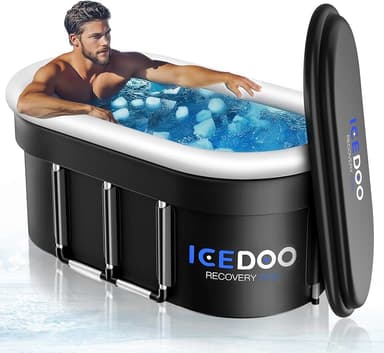
Generic
Upgraded 175-Gal Oval Ice Bath Tub with Air Ring
A 175-gallon oval cold plunge with an inflatable air ring top for comfort and structural support. The foldable and inflatable hybrid design offers a unique balance of capacity, comfort, and portability.
Product Testing Lead and Wellness Writer
Products Mentioned in This Article
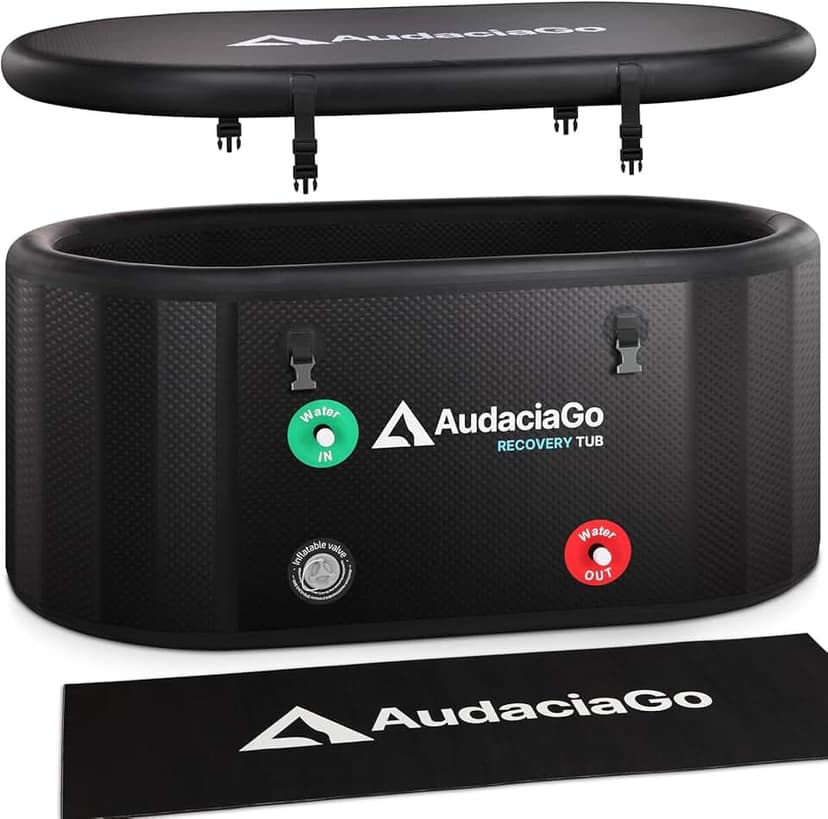
XXL 216-Gallon Inflatable Cold Plunge Tub with Insulated Lid
The largest inflatable cold plunge on the market at 216 gallons. Compatible with water chillers, includes an insulated lid and thermometer. Built for athletes who want full-body immersion.
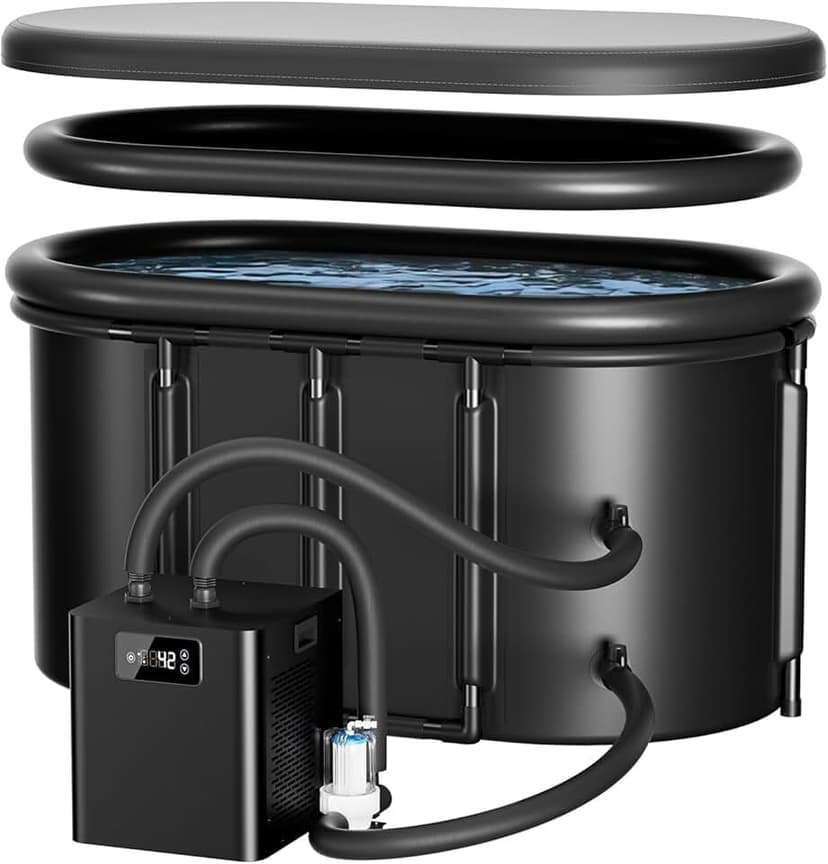
Ice Bath Chiller and Cold Plunge Tub Kit 1/3HP
A complete cold plunge system with 1/3HP chiller, external pump, filter, and a 148-gallon XXL tub. Eliminates the need for ice entirely and maintains your target temperature automatically.
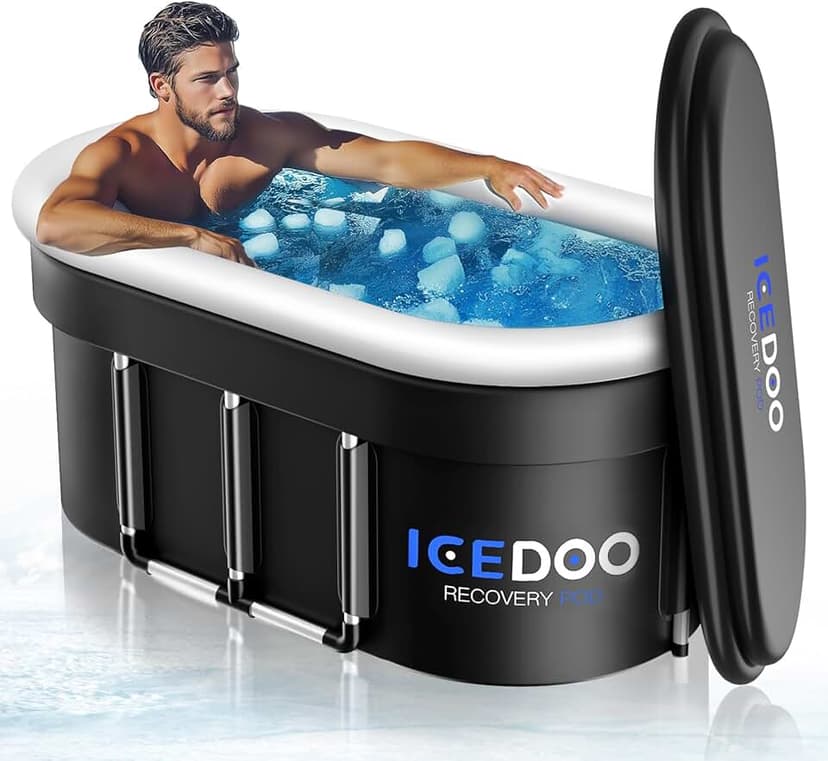
Upgraded 175-Gal Oval Ice Bath Tub with Air Ring
A 175-gallon oval cold plunge with an inflatable air ring top for comfort and structural support. The foldable and inflatable hybrid design offers a unique balance of capacity, comfort, and portability.